

Many creative teams believe they have their client’s marketing strategy mastered. However, when laser focused on writing a brand brief, planning a campaign, or approving a budget, the most consequential marketing decisions have been mistakenly swept over. The marketing power of the product design phase is often overlooked. In fact, months before what many think is the quintessential pipeline of marketing, another team is already thinking about tolerances and material costs and firmware architecture over ad copy.
The form factor of the product, the finish on its surface, the way a mechanism engages when you press a button, the weight of it in your hand. The process involved in product innovation may not seem filled with weighty marketing decisions at first, but it inevitably determines whether a consumer picks something up, trusts it, keeps it, and shares about it. Getting it right in this stage is the foundation that every downstream marketing effort either builds on or crumbles underneath.
Tomorrow Lab®, a Brooklyn-based hardware innovation studio founded in 2010, has spent over a decade optimizing this process with Fortune 500 companies, venture-backed startups, and global advertising agencies. Developing products from first ideation through manufacturable prototypes and into distribution. What that body of work demonstrates, consistently, is that the brands who treat industrial design and mechanical engineering as strategic investments rather than production costs are the ones whose products earn lasting market positions, generate organic press, and build consumer loyalty that no campaign budget can replicate.
The Product Is the Message
There, of course, is a version of hardware design that is purely functional: get the BOM tight, hit the tolerance stack, pass compliance, ship. And then there is a version that understands the object itself as a communication medium, where every material choice, surface treatment and assembly detail is also making a statement about what the product represents and who it’s for. The most marketable products are the ones where the engineering rigor and the design intent are so thoroughly integrated that the finished object communicates its own value and any after market messaging is a bonus. Apple is famously known for this approach.
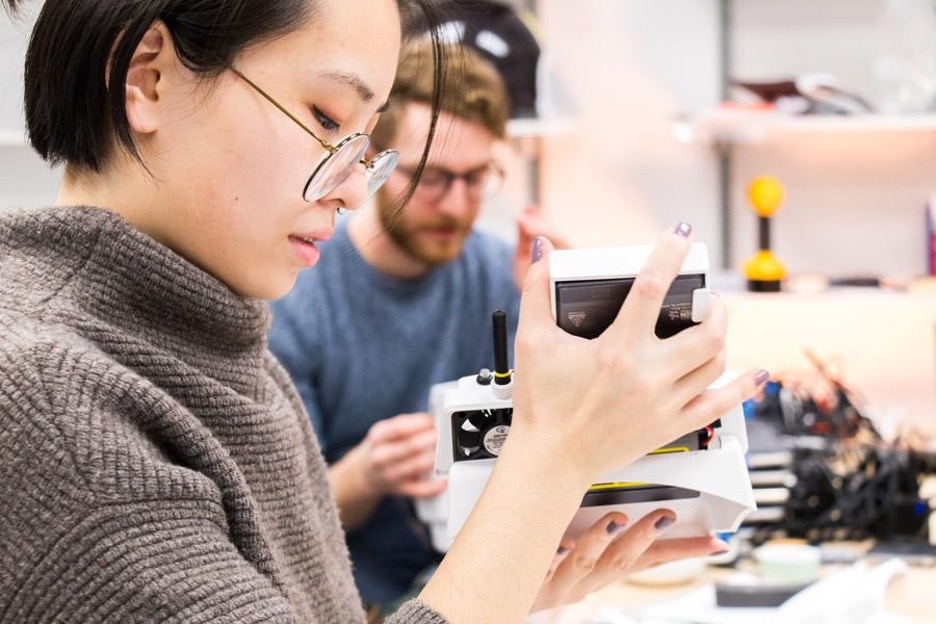
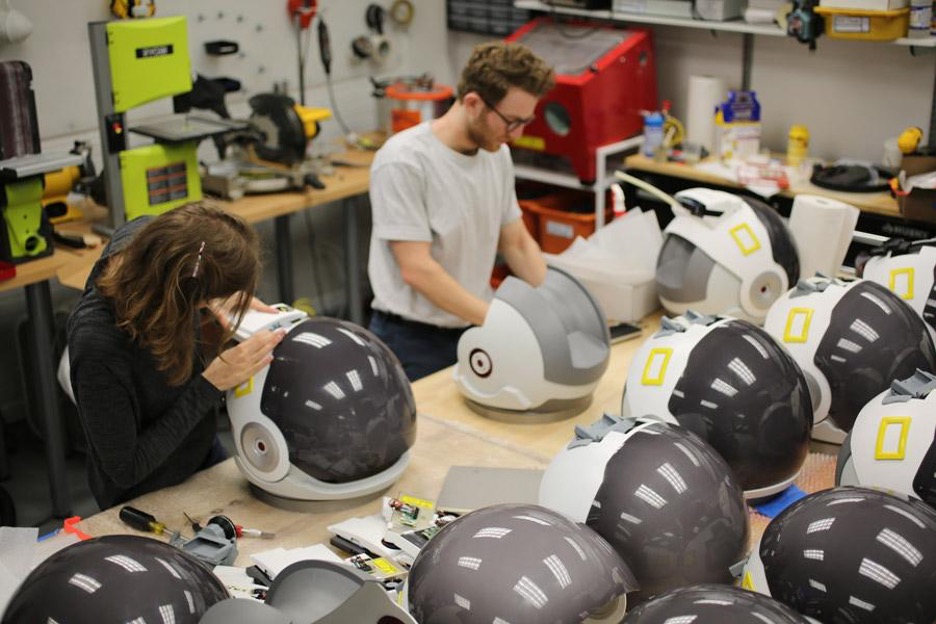
When Tomorrow Lab® collaborated with McCann NY and FrameStore to create the Astronaut Reality Helmet for National Geographic’s series One Strange Rock, the product architecture was built around a single experiential goal: place the viewer inside an astronaut’s perspective of Earth from space, and make it feel real. The visor was a projection screen, specially textured and painted to display content on both its interior and exterior surfaces simultaneously, with a battery-powered laser projector behind a custom fish-eye optic that eliminated visual distortion across a wide field of view. Twenty-five units were hand-assembled in Tomorrow Lab’s NYC studio from 3D printed MJF parts, cast urethane visors, and thermoformed harnesses. Each one functions as a wearable cinematic experience that generates press coverage, social sharing, and audience engagement that no conventional advertising placement alone could have delivered. Adweek recognized it with the top Gravity Award at the 2018 Project Isaac Awards. The design didn’t just support the marketing strategy. It was the marketing strategy, because the invention itself was compelling enough to be the story, and now performs in venues that support this story, like at Yuri’s Night Los Angeles at the Griffith Observatory.
Form Factor as Brand Language
One of the most underappreciated aspects of hardware product development is how much brand equity is built (or lost) in decisions that happen at the prototype stage, long before a marketing team is involved. The form factor of a product, the way it’s held and operated and stored and encountered by a stranger from a distance, is a brand language that either communicates confidence or the lack thereof, and it cannot be revised in post-production the way a campaign might be able to.
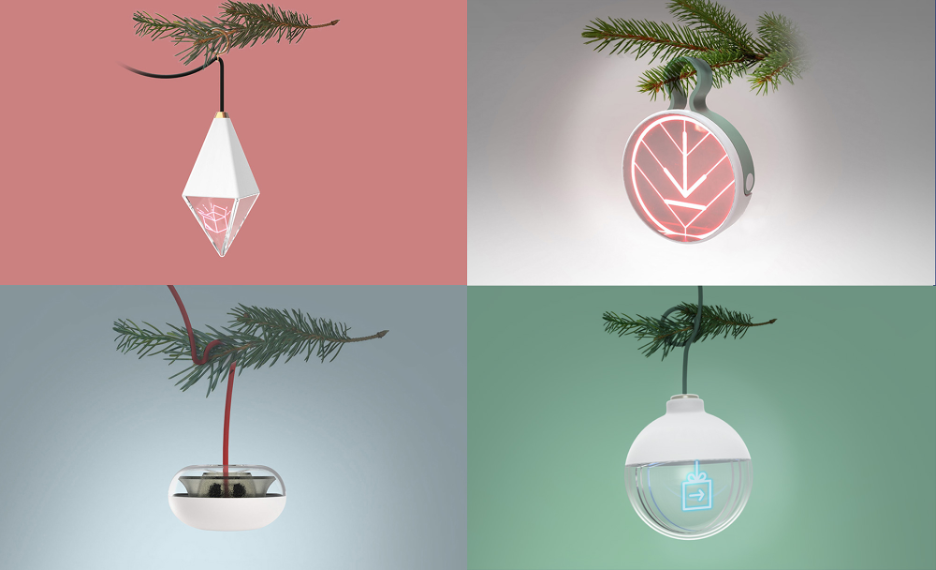
For the 2016 holiday season, Tomorrow Lab® collaborated with McCann New York and the United States Postal Service to develop The Most Wonderful Ornament™, a connected kit that tracks a holiday package from shipment through delivery to the moment the recipient opens it, and communicates each stage to the sender through a beautifully engineered LED ornament. The ornament itself was constructed from edge-lit acrylic panels layered inside a classic ornament form, each panel carrying a simple iconic gift that illuminated in sequence as the package’s status changed, with cellular connectivity providing real-time updates that didn’t require any user setup. USPS package tracking data already existed on a website, but the design challenge Tomorrow Lab® was really addressing wasn’t about data, it was about developing a piece of hardware that could make the experience of sending and tracking a gift feel meaningful in a way that a push notification never could. The ornament is beautiful enough to hang on a Christmas tree and precise enough in its engineering to deliver on its function every time.
The intersection of feature-led and design-led product thinking is one of the most important founder considerations for marketing, because features answer what a product does while design answers why someone would want it in their life. The distinction, if it’s been worked out properly at the prototype stage, does more for brand perception than any retention aftermath.
Design Expands What a Product Can Mean
Good hardware design doesn’t just execute a brief to ‘check the box’. It interrogates it, pushing on the assumptions embedded in the original proposal, until something more interesting emerges. The products that generate the most durable market positions are often the ones where the design process revealed a possibility that wasn’t in the original scope.
In one seven-week sprint, Tomorrow Lab was challenged to explore what a smartphone case could become if design was given genuine latitude.The result wasn’t a better version of an existing accessory category but three fully realized works-like, looks-like prototypes that each reframed what a phone in your pocket could do. One adding a persistent ePaper secondary display for contextual information, one using a dove-tail optical prism to redirect the screen’s light into a minimal display when face-down, and one incorporating retractable mechanical shutter and focus buttons that deploy automatically based on grip pattern and rotation recognition.
Each concept made its argument through the object itself, without requiring an explanation, which is the clearest possible demonstration of why design clarity translates directly into marketing efficiency — when a product communicates its own value proposition in a five-second interaction or a single photograph, the cost of educating the market drops to nearly zero, and the product does its own best advertising.
Read More: AB InBev Sustainability Shift: How the World’s Biggest Brewer Is Going Green
The Long Game: Good Design as a Retention Strategy
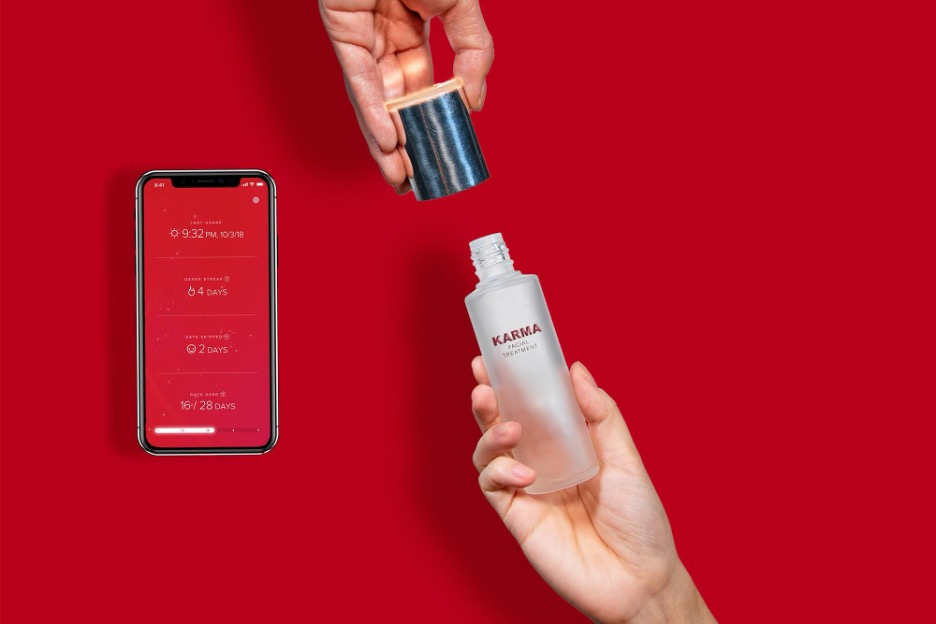
The launch cycle is short, the market is crowded, and the products that sustain their positions over time are the ones designed to remain genuinely useful and desirable in a consumer’s life well past the initial purchase. Through the quality of the daily tactile experience they deliver and the intelligence of the interaction model built into the hardware from the beginning. When Tomorrow Lab developed the Smart Cap for use in the consumer packaged goods (CPG) industry, the design challenge was to transform one of the most overlooked objects in a consumer’s routine, like a bottle cap, into a brand touchpoint that made the product more valuable over time. The finished cap features a beautifully diffused LED rim delivering gentle, color-coded reminders to maintain a skincare regimen while a proprietary BLE circuit silently logs usage data and syncs it to a companion app in the background.
The cap changed the relationship between the consumer and the brand, embedding a daily reminder of that brand’s investment in the user’s experience into an object they interacted with twice a day. For marketing leaders evaluating where design investment pays the longest dividends, that is the model worth studying. A product designed well enough to earn a permanent place in someone’s routine is doing more brand work every day than any ongoing paid media effort. Compounding return begins in the prototyping phase, not in the campaign planning room.
The Investment Case
Product design and marketing are not sequential disciplines expressed through design first, then marketing, but rather parallel strategies that inform each other from the earliest stages of development. The most successful product launches happen when industrial designers, mechanical and electrical engineers, and brand strategists are aligned before a single tolerance is set or a BOM is drafted, treating the physical object as a communications vehicle from day one and understanding the investment in craft as the foundation that every downstream marketing effort either builds confidently on or tries to compensate for.
Tomorrow Lab’s approach, refined across hundreds of projects and more than fifteen years of prototyping, iterating, and bringing hardware to market, treats every design decision as a marketing decision made early. They know the material, the mechanism, the form factor, the surface finish, and the assembly experience, each shaping how a product is perceived, discussed, and remembered long after the launch cycle ends. Working with a hardware innovation studio like Tomorrow Lab®, with the discipline and expertise they practice, is the highest-leverage investment a company can make.
Learn more about Tomorrow Lab® and their product design process at tomorrow-lab.com.
Read More: IPO a Great Success: FIT GROUP AG Makes a Strong Debut on the Vienna Stock Exchange