
Up until the last several years, nuclear power has been out of favor in the United States. However, thanks to transformative safety innovations and geopolitical shifts, the tide has begun to turn. Nuclear power is gaining momentum in the U.S. once more, and NANO Nuclear is one of the startups at the forefront of the movement.
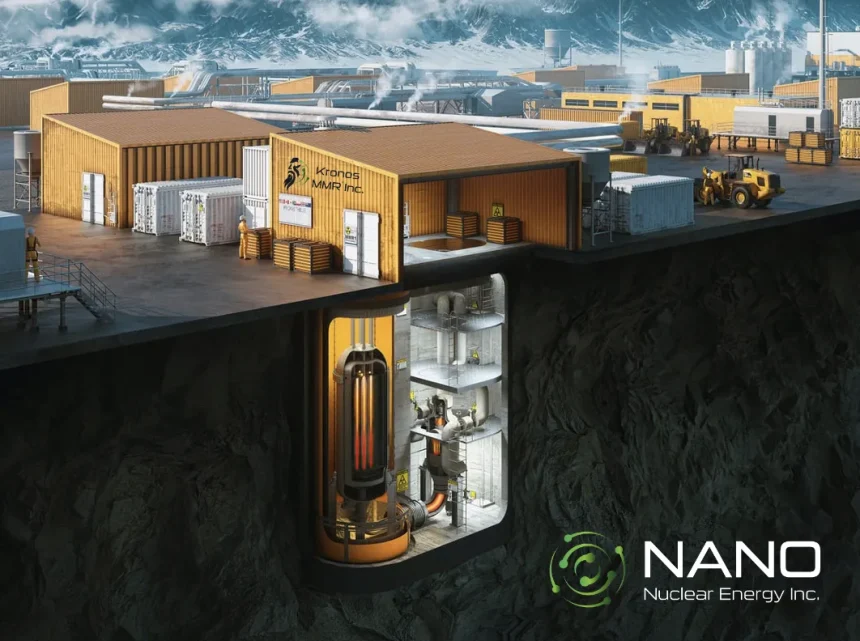
NANO Nuclear is a company focused on building micro modular reactors (MMRs). Unlike the massive reactors of the past, MMRs are small, portable, and capable of bringing nuclear power to remote areas.
And unlike many other startups in the nuclear sector, NANO Nuclear also handles fuel manufacturing and transport. This unique vertical integration has positioned the company to become a driving force in the country’s nuclear-powered industrial revolution.
Nuclear energy isn’t new, so one might reasonably wonder: Why nuclear, and why now?
For decades, the United States has searched for a reliable source of green energy. The high startup cost and intermittent nature of sunlight and wind have made solar and wind power impractical on a large scale, especially in remote locations, as these renewables require optimal conditions. Although nuclear technology has remained an option, safety-related fears have prevented its widespread acceptance.
“When they hear the word ‘nuclear,’ the average person thinks of the big nuclear reactors and mushroom clouds and toxic waste,” says Jay Yu, founder and Executive Chairman of NANO Nuclear. “But when you start digging into it, and you look at the numbers, nuclear is the safest energy.”
Recent innovations like tri-structural isotropic (TRISO) fuel are making nuclear energy far safer than it was before. TRISO fuel is made of uranium particles coated with ceramic and carbon. The coating keeps uranium particles contained even in extreme heat, making a nuclear meltdown impossible.
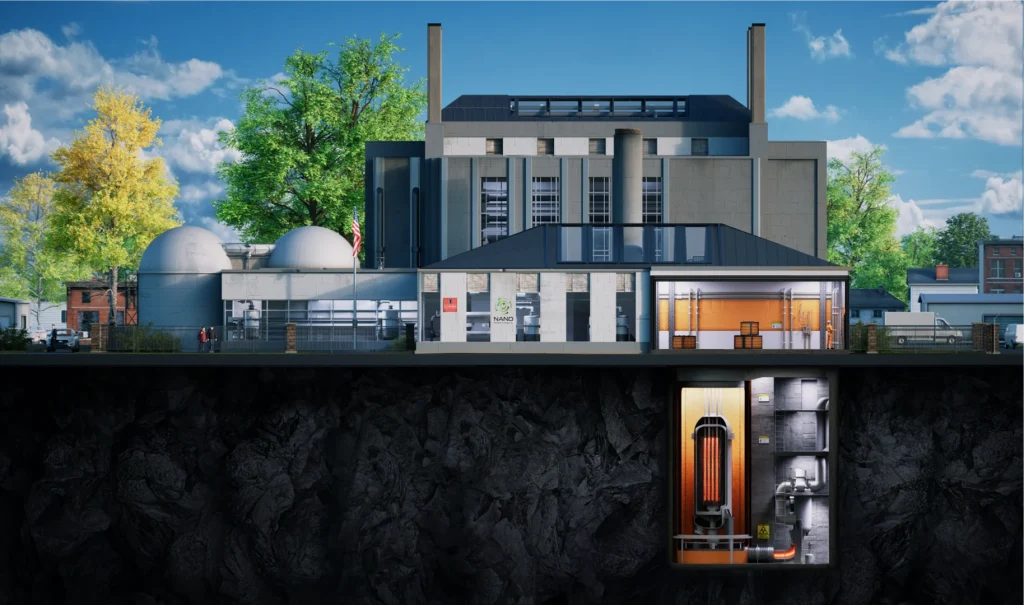
“We can tell people now that the worst accident scenarios that were possible with the old reactor systems, like Three Mile Island or Fukushima, are just not possible with these new reactor systems,” says NANO Nuclear CEO James Walker. “It sends a very different message: This is an inherently safe system. It could be in your backyard. It needs very little maintenance.”
In recent years, nuclear energy has become a matter of national strategy, not just an issue of sustainability.
The U.S. previously imported almost all of its enriched uranium (the fuel needed for nuclear reactors) from Russia. As the relationship between the two nations deteriorated, it became clear that America needed a domestic supply chain for clean energy. By building a complete nuclear supply chain, the U.S. can guarantee energy independence and shore up national security.
From there, the United States launched into a new industrial revolution. In 2024, the Department of Energy announced a $3.4 billion nuclear power initiative and awarded contracts to several companies. One contract (awarded to laser enrichment company LIS Technologies) named NANO Nuclear as a key subcontractor.
The versatility and dependability of nuclear power have also pushed it to the forefront of the energy revolution. It has constant baseload power, which means it runs continuously to provide power 24/7. Sources like wind and solar are intermittent, so the availability of energy fluctuates with the weather.
Crucially, NANO Nuclear’s microreactors don’t have to be part of a power grid to operate. As such, they can be deployed to disaster-stricken and remote areas to provide long-lasting, reliable energy.
The United States’ nuclear Renaissance is still in its early stages. NANO Nuclear’s KRONOS reactor has just begun a feasibility study in partnership with the University of Illinois Urbana-Champaign. If all goes as planned, the country might be closer to secure, sustainable energy than previously thought.