
We’ve all been in that boardroom. You know the one.
The lights are dimmed, a projector hums in the corner, and a beautifully formatted, color-coded five-year strategic plan is projected onto the screen. Everyone is nodding. The metrics look solid. The action items are assigned. For a brief, shining moment, it feels like we have it all figured out. We have a plan, so we must have control.
But here’s the uncomfortable truth that most leadership books won’t tell you: you cannot spreadsheet your way out of a culture crisis. And you certainly can’t strategize a miracle.
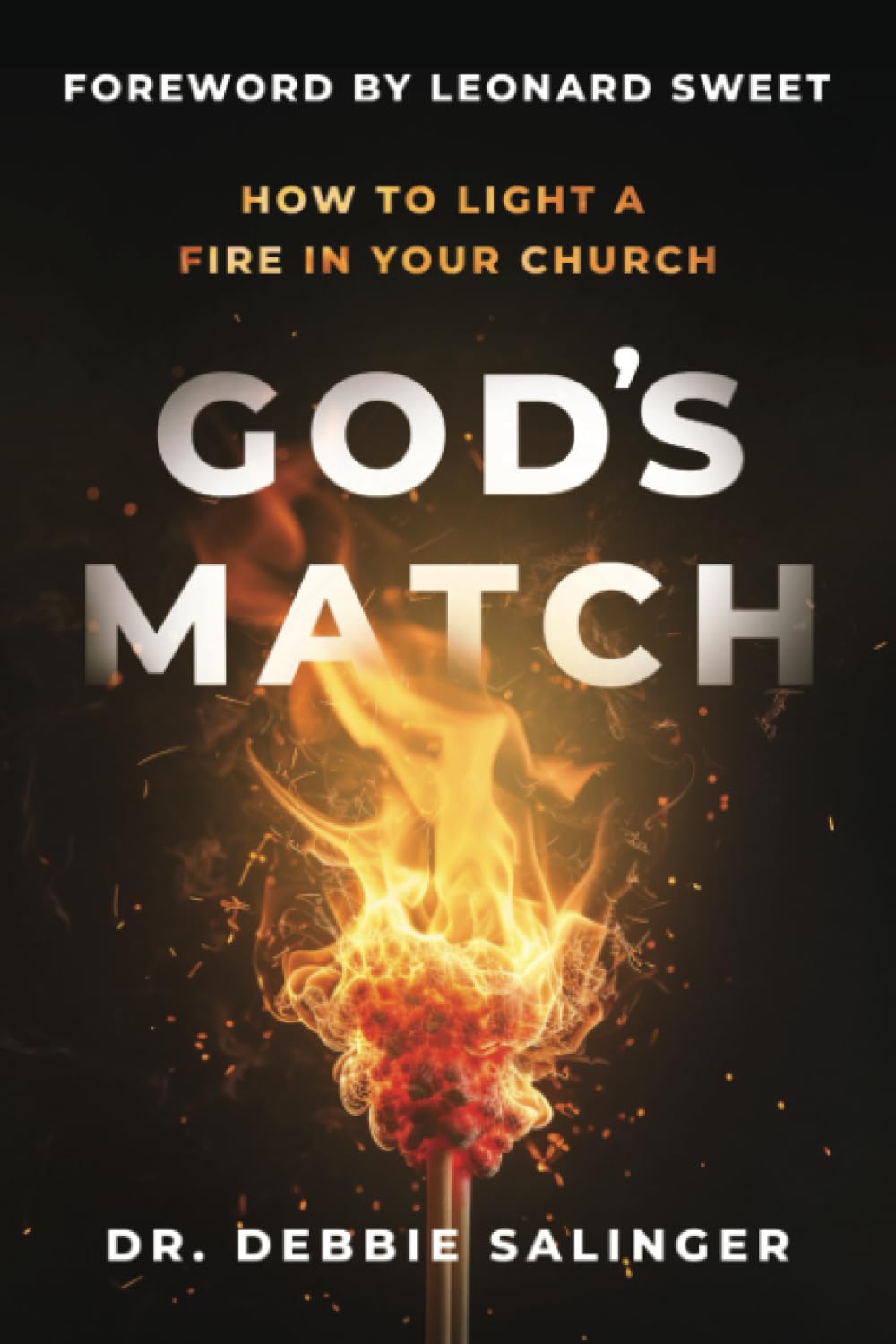
In her groundbreaking book, God’s Match: How to Light a Fire in Your Church, Dr. Debbie Salinger points out a harsh reality that applies to just about any organization facing decline, whether it’s a Fortune 500 company, a local nonprofit, a creative agency, or a community group. When institutions get scared, they freeze. We cling to old traditions, outdated assumptions, and the illusion of safety. We become what she calls “zombie institutions.” We go through the motions, terrified of the very thing that could actually save us: change beyond our ability to predict or control, approached through prayer and responsiveness to the Holy Spirit.
Dr. Salinger knows a thing or two about this. Drawing from her extensive background in leadership and ministry, she knows what it takes to manage strict budgets, navigate complex systems, and guide teams through uncertainty. Planning, budgets, and organizational systems serve important purposes. Congregational renewal also requires prayer, spiritual discernment, and a willingness to follow where God is leading.
Why? Because true turnaround isn’t about better management. It’s about combustion.
And if you know anything about a real fire, you know it isn’t neat, predictable, or easily controlled. To get a fire going, you need three very specific things: fuel, heat, and oxygen. Although written for churches, the book raises questions about institutional habits, leadership, and openness to change that readers in other settings may also recognize.
First, you need fuel. In the corporate and nonprofit worlds, we love to protect our legacy. We hold onto “the way we’ve always done it” like it’s a sacred relic. But if you want to start a new fire, you have to be willing to use the past as kindling. That means sacrificing outdated habits, letting go of pet projects that no longer serve the mission, and dismantling the security blankets that keep your team from taking real risks. You can’t build the future if you’re hoarding the past.
Second, you need heat. We are often taught that good leadership means keeping the peace at all costs. We avoid conflict. We smooth things over. But Dr. Salinger argues that heat, the friction of healthy debate, passionate brainstorming, and daredevil risk-taking, is exactly what you need to spark a flame. Discomfort isn’t always a bad thing. Sometimes, a little friction is the only way to remind your team that they are still alive and that the work still matters.
Finally, you need oxygen. In the book, Dr. Salinger is crystal clear about what this oxygen is: it is the Holy Spirit. She illustrates this with the incredible true story of Chris Lemons, a deep-sea saturation diver who was trapped 300 feet under the sea without light or heat. Miraculously, he survived because the high level of oxygen in his tank had so completely saturated his tissues and cells that he did not suffer organ or brain damage.
Dr. Salinger uses this to illustrate a profound organizational truth: “For the church, the Holy Spirit is our oxygen and the breath that animates the body.” Just as physical oxygen must saturate our cells to keep us alive, the Holy Spirit must saturate our organizations. We cannot survive on the shallow breath of strategic planning and institutional maintenance. We need deep, immersive saturation in the Spirit.
When an organization achieves this “Spirit-saturated” state, the results are transformative. It moves beyond mere survival and steps into true vitality. Dr. Salinger highlights the adaptability and outward focus of a Spirit-led community, noting that “Spirit-infused churches quickly consume dry flesh. They burn off their dead matter. They grow new skin. Their passion is contagious.”
These congregations foster alternative “third spaces”, safe, non-judgmental communities where people are free to express their struggles, difficulties, and failures without gossip or exclusion. Instead of operating with a hierarchical “us versus them” mentality, a Spirit-led organization flips the dynamic entirely. As Dr. Salinger explains, the community does not minister to others; it ministers with its neighbors. “They learn together. They explore together. They laugh together. They cry together.”
This forward movement requires what Dr. Salinger calls a high “Adaptability Quotient,” or AQ. A community with a high AQ appears open to change, non-judgmental, calm, nurturing, spontaneous, creative, and relational. They see the future with optimism and view change as a grand adventure. They don’t just wait for people to come to a traditional building; they actively create spaces for authentic connection right where people are.
Breaking the cycle of institutional decline requires courage. It requires admitting that your five-year plan might be completely wrong. It requires looking at your most cherished policies and asking, “Is this keeping us safe, or is it keeping us stuck?”
You cannot force a cultural revival. You can’t mandate passion. But you can set the stage for it. As Dr. Salinger beautifully puts it, “We can’t ‘make’ the Spirit raise a church any more than we can make the wind do our bidding, but we can provide a windmill and a match.”
We can choose to stop dousing every little spark of innovation because it doesn’t fit the budget. We can choose to stop avoiding the tough conversations that generate the heat we need to grow. We can choose to clear away the dead brush of our old assumptions and finally invite the Holy Spirit to saturate the room.
It’s going to be messy. It’s going to be unpredictable. And it’s going to require you to let go of the steering wheel. But as Dr. Salinger reminds us, “What moves, changes. It breathes. It grows. What doesn’t move remains stuck in place to decline, decay, and eventually pass away.”
Stop trying to manage the fire. Just give it the fuel, the heat, and the oxygen of the Holy Spirit, and watch what happens.
God’s Match: How to Light a Fire in Your Church is available now. Learn more at SpiritFireMatch.com.
About the Author
Dr. Debbie Salinger is a recently retired United Methodist elder in the Florida Conference. She holds a Doctor of Ministry degree from Portland Seminary, where her studies concentrated on Semiotics, Church, and Culture.