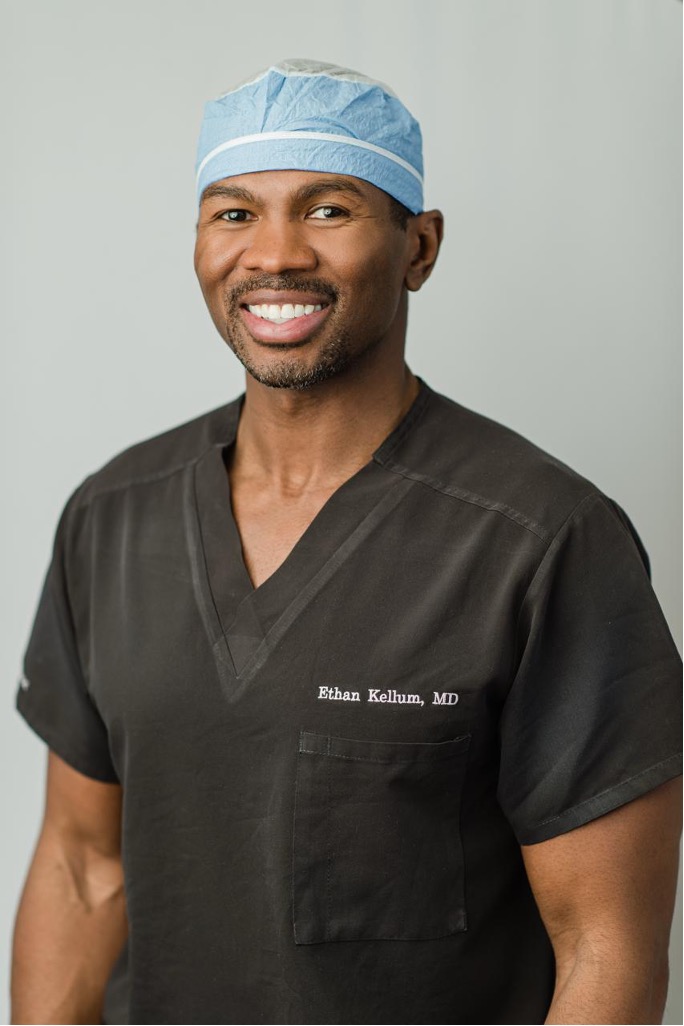
Most orthopedic surgeons build a career in the operating room. Dr. Ethan Kellum has built his own business helping people stay out of it.
It is an unusual position for a man who is trained to cut. Kellum is a fellowship-trained orthopedic and sports medicine surgeon in Franklin, Tennessee, and a team physician for the Tennessee Titans and USA Basketball. He earned his stripes in one of the busiest surgical fellowships in the country, at New England Baptist Hospital in Boston. He knows exactly what surgery can do. He also knows what it costs a patient, and that knowledge shapes how he runs his practice today.
“I’m a surgeon, I will always be a surgeon, and it has its place,” Kellum says. somewhere better without having to do that.”
“I’m a surgeon, I will always be a surgeon, and it has its place,” Kellum says. “But we can get you somewhere better without having to do that.”
An unconventional start
Kellum’s path into medicine reads less like a career plan and more like a series of doors he happened to walk through. As a Boy Scout in high school, he volunteered at a hospital, first on the OB-GYN floor, then, years later, in a pediatric emergency room while he weighed a future in pediatrics. Neither specialty held him. What caught his attention was the orthopedic surgeons who came down to the ER.
“When I saw the orthopedic surgeons come down, it was super simple,” he says. “This is broken, you’ve got to fix it. I enjoyed working with my hands, so it was very easy, and I was drawn to that type of medicine.”
The residents noticed his interest and started teaching him. One night, after Kellum had quietly prepared everything needed to reset a child’s arm, a resident turned to him and said they were going to let him do the next case himself. This was before Kellum had set foot in medical school. Word eventually reached administration, and he was asked to step away, but the pull toward orthopedics had taken hold. The origin story tells you something about the surgeon he became. He learned the work from the inside out, and he never stopped questioning the standard way of doing things.
Where the business of medicine went wrong
Ask Kellum what has changed in medicine over his career, and he points to a system that too often reaches for the most aggressive option first. His counterargument is simple. Try something less invasive before you try something you cannot undo.
“If you walk into someone’s office and you’ve got back pain and they’re telling you we need to do this, try something else,” he says. “Not saying you won’t get to the point that you need surgery. But sometimes the body just needs a little help to do what it’s supposed to do.”
He has watched the aftermath enough times to hold that line. During residency he operated on spines, and what he saw stayed with him. “The far majority of people didn’t do so hot after it was done,” he says. “Once you’ve had a surgery, that’s it. You’re not going back.” He tells his own family that if a car wreck leaves a spine out of place, call someone else and let them do what must be done. Short of that, he wants to exhaust the alternatives first.
What makes his position credible is who seeks him out. Kellum says he treats a number of cardiologists, and even some orthopedic surgeons, who come to him for care. These are the physicians who clear surgical patients and watch what happens next. “They see what it’s like,” he says. “They’re like, yeah, I’m not going down that route. I’ll do a bunch of other things before I decide to do that.”
Honest about the limits
For a doctor who has built a practice around regenerative and recovery-focused medicine, Kellum is refreshingly unwilling to oversell it. Ask him about the biggest misconception patients bring through his door, and he names the hype directly.
“That it’s magical and it works for everybody. That’s one of the big ones,” he says. The opposite extreme, he adds, is just as wrong, the patient who tried it once, saw nothing, and wrote it off. “Quite honestly, it’s in the middle. It depends on what’s going on and how you’re being treated.” He is quick to say it is not a cure and not a panacea, and that results come alongside the basics that never go out of style: good nutrition, movement, strength around the joint, and sleep.
That candor is the throughline of his practice and, increasingly, his brand. In a field crowded with big promises, Kellum has staked out the harder ground of telling patients the truth about what a treatment can and cannot do.
“Getting more of the word out and helping people understand what this can and can’t do is super important to me,” he says.
For a surgeon, it is a striking mission. Not to operate more, but to help people understand when they may not need to at all.