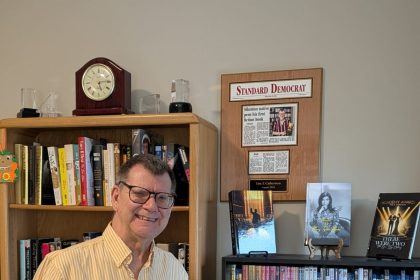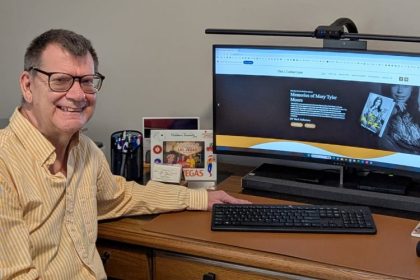

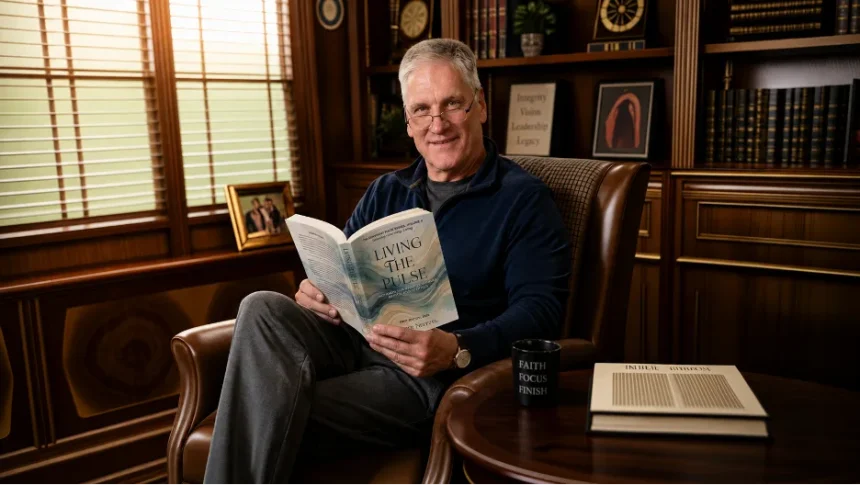
In the quiet of a book-lined study, Cooper Neitzel holds open a volume whose title reads like both a description and a challenge. Living the Pulse is not framed as a survey to finish and shelve. It is designed as a practice: a way for seekers, sinners, saints, and skeptics to listen more carefully, choose more deliberately, and allow belief to become visible in ordinary life.
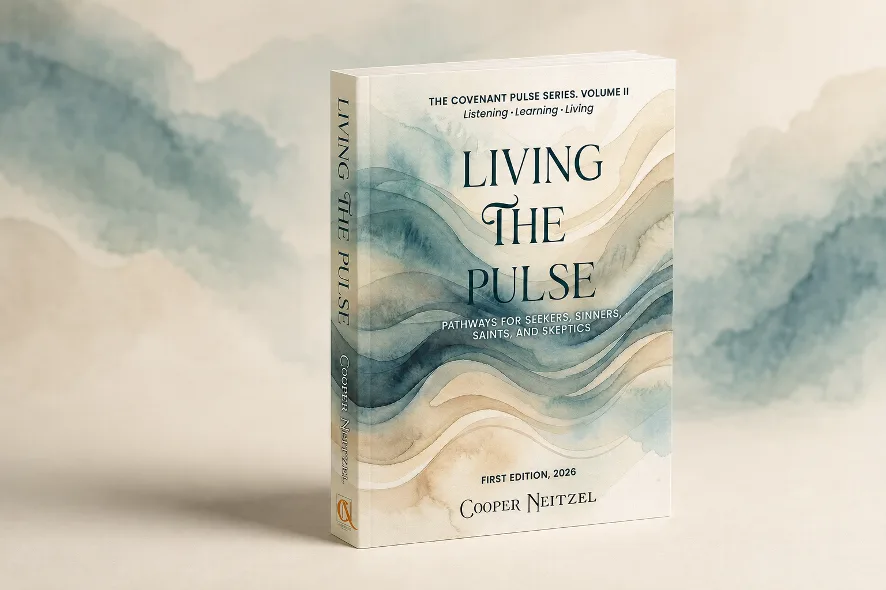
Published as the second volume of The Covenant Pulse Series, the book takes the project in a decisive new direction. The first published volume, Promised Lands: Pathways of Call, Wilderness, and Arrival Across Seven Faiths, followed communities and traditions through sacred journeys. Volume II brings the camera inward. Its subject is no longer only where people travel in faith, but how faith forms a person after the journey has entered the heart.
That shift gives Living the Pulse its role in the series: it is the bridge between recognition and embodiment. The larger project asks readers to listen, learn, and live. This installment puts the final verb under pressure. What does a person actually do with the light received from scripture, community, doubt, repentance, and another tradition’s witness?
Distinguished Author Recognition Adds a New Milestone

The International Impact Book Awards has selected Neitzel as a Distinguished Author for Living the Pulse, according to the award notification accompanying the recognition. The notice says the title was reviewed against the program’s Standard of Excellence and that the designation is reserved for a limited number of authors, leaders, and voices whose work demonstrates genuine impact on the readers and communities they serve.
The language of the honor closely echoes the book’s central ambition. It describes recognized authors as voices whose words carry weight and whose ideas leave a lasting mark. For Living the Pulse, the distinction places a new spotlight on a project concerned with what belief produces after the final page: deeper reflection, more faithful action, and more charitable engagement across difference.
A Series Built to Move
The Covenant Pulse is Neitzel’s name for a recurring movement of spiritual life: a person receives a call, orders life around it, yields control, acts, reflects, and begins again. In the series’ first volume, that pulse appears at the scale of peoples and pilgrimages. In the second, it appears in a morning decision, an apology, an act of service, a disciplined prayer, or an honest reckoning at day’s end. In that sense, the title manifests the book’s central claim: faith is alive when it has rhythm. Conviction without practice can harden into a slogan; practice without reflection can become a habit without meaning. Living the Pulse tries to hold conviction and humility together long enough for each to correct the other.
The PRAYER Sequence at the Book’s Center
The book’s formation spine is an acronym Neitzel calls the PRAYER Sequence: Purpose names the sacred why; Resolve makes a commitment; Alignment orders time, habits, body, and environment; Yield releases the need to control outcomes; Embody turns intention into concrete action; and Reflection reviews the result honestly enough to begin again.
Neitzel compares the first three movements to the heart gathering inward and the last three to the heart releasing outward. The metaphor matters because it keeps spiritual formation from becoming a straight-line performance. A pulse repeats. So do attention, commitment, surrender, service, failure, repair, and renewal.
The Covenant Pulse is not a system to be mastered. It is a rhythm to practice.
Living the Pulse
The framework is then tested in four recognizable seasons of the soul. The seeker begins in ignition, when longing first catches fire. The sinner enters through disruption and repair. The saint faces endurance, the long middle where devotion must survive fatigue. The skeptic begins through adoption—not borrowed certainty, but an examined commitment strong enough to live and test.
These categories are starting points, not permanent identities. A reader may move among them in a single year or even a single day. That flexibility is one of the book’s practical strengths: it meets people at different thresholds without treating doubt as failure or devotion as arrival.
Seven Windows Without a Melting Pot
Living the Pulse listens through seven windows: Judaism, Christianity, Islam, Hinduism, Buddhism, Sikhism, and the Latter-day Saint Restoration. But its aim is not to claim that every faith teaches the same thing. Neitzel repeatedly separates resonance from distinction—where traditions echo one another and where their doctrines, authorities, scriptures, or practices remain irreducibly their own.
That discipline gives the interfaith project its moral center. Other traditions are not scenery for a predetermined conclusion. Their sacred texts and lived practices are approached as testimony that deserves to be heard on its own terms. The result is less a comparative-religion scorecard than an exercise in hospitality.
The book states the wager plainly: “We cannot truly love what we have not first bothered to hear.” In a public culture that often rewards instant judgment, careful listening becomes more than politeness. It becomes a spiritual practice—and a form of civic repair.
The volume combines seven faith windows, a six-movement formation sequence, and portable practices for daily use.
What the LDS Lens Adds
Neitzel does not write from a neutral nowhere. He identifies himself as a lifelong practitioner of the Latter-day Saint Restoration and says that the restored gospel shapes both the questions he asks and the hope he brings to the work. The manuscript also expressly states that its views are the author’s own and do not necessarily represent the position of The Church of Jesus Christ of Latter-day Saints.
For Latter-day Saint readers, that declared location creates several kinds of value. First, the book offers a way to recognize truth and disciplined goodness in other faiths without asking readers to abandon Restoration convictions about Jesus Christ, covenant, priesthood authority, ordinances, sealing, scripture, or continuing revelation. The governing posture is not doctrinal blur. It is conviction without contempt.
Second, the PRAYER Sequence can make familiar discipleship practices newly visible. Purpose can clarify why a covenant matters; Resolve can renew a choice before emotion catches up; Alignment can expose the habits that either support or undermine spiritual intention; Yield can loosen pride and control; Embody can turn testimony into service; and Reflection can make repentance a recurring practice rather than a single dramatic event.
Third, the seven windows can prepare Latter-day Saints for more responsible interfaith friendship. Listening to how Jews speak of covenant, how Muslims order life around surrender, how Sikhs join devotion and service, or how Buddhists attend to suffering can deepen respect while also sharpening a reader’s understanding of what is distinctive in his or her own tradition. The benefit is not religious tourism. It is a more informed, charitable, and self-aware discipleship.
The value travels in the other direction as well. Readers outside the LDS tradition receive a transparent account of the Restoration from someone who inhabits it, including its claims and tensions. That transparency matters. Interfaith understanding becomes more trustworthy when a writer names a home rather than disguising it as universality.
What Readers Can Carry From the Series So Far
Taken together, the two published Covenant Pulse volumes create a useful sequence. Promised Lands teaches readers to notice the structure of sacred journeys—call, wilderness, and arrival—across seven faiths. Living the Pulse asks what happens after arrival: how insight becomes character, how conviction survives uncertainty, and how a person returns to practice after failure.
- A larger vocabulary for spiritual experience. The series gives readers language for call, wandering, purpose, surrender, repair, and renewal.
- A disciplined form of interfaith literacy. It encourages respect without pretending that doctrinal differences are unimportant.
- A practical rule for formation. The PRAYER Sequence and 10-minute exercises lower the threshold between reading and doing.
- A healthier relationship with doubt. Skepticism becomes a possible doorway to examined commitment rather than a label of exclusion.
- A covenant ethic for public life. Listening, humility, honesty, and service become habits that can improve families, congregations, and communities.
The portable practices in Volume II make that promise especially concrete. Readers are invited to choose a season, use a 10-minute rule, and test the framework in the conditions of real life. The book’s closing counsel is appropriately modest: “Ask with sincerity. Walk with humility. Begin where you stand.”
A Manifesto for Faith That Can Be Lived
What, finally, does Living the Pulse manifest? It manifests a form of faith willing to be both rooted and teachable. It argues that reverence for another person’s sacred world can coexist with a clear account of one’s own. It insists that belief becomes credible when it travels through the body—in calendars and meals, in work and worship, in service and restraint, in apology and return.
That makes Volume II more than a sequel. It is the series’ conversion point: the moment when the reader is no longer merely observing the pulse across traditions but is asked to feel it in his or her own life. The book does not promise a final arrival. It offers something more usable—a rhythm for beginning again.
| AVAILABLE NOW • AUDIOBOOK COMING SOON |
|---|
PURCHASE LIVING THE PULSE ON AMAZON The print edition is available now. The audiobook edition is coming soon. |
| Follow release updates and discover more from Cooper Neitzel. |