


After a career spanning journalism, advertising, entrepreneurship and strategic advisory, Sizyh is applying what she learned about perception to a larger question: what makes people trust, fund and follow an idea in the first place?
For much of her career, Elizaveta Sizyh worked with businesses that were already built, at least in their basic form. There was a company, a product and a market; her job was to find the idea inside that structure that could make people notice it, remember it and, eventually, care.
These days, she tends to start earlier.
She is interested in why one business makes sense almost immediately while another needs a 40-page deck to explain itself, why an audience can sometimes become more valuable than traditional distribution, and what happens when artificial intelligence makes it increasingly cheap to produce almost anything without making people any easier to convince.
And, increasingly, she is interested in what happens before capital arrives.
Sizyh’s career began in journalism before moving into advertising and strategy, including roles at agencies such as Red Keds and Pichesky and, later, Grape, where she served as SMM Director. Her work during that period included projects involving Google Play, Beeline, Tele2 and Tuborg, as well as an international fintech launch across 12 markets.
In 2017, she founded her own marketing agency, which she built and later sold in 2023. Since then, her work has moved toward strategic advisory, particularly around positioning, growth, international expansion and investor readiness.
On paper, it can look like a career change. Sizyh sees it more as a change in distance: for years, she was trying to understand how to make an existing business easier to see; now she is more interested in understanding why the business works the way it does in the first place.
The View Changes When It’s Your Company
Advertising taught Sizyh how easily intention and interpretation can drift apart, because a company may be perfectly clear about what it wants to communicate while the people on the other side hear something entirely different.
At Pichesky, she worked on strategy and communications involving brands including Google Play and Beeline. Later, at Grape, where she served as SMM Director, her work included Tele2 and Tuborg.
One Beeline project, developed during a period of online criticism, took a less defensive approach than brands often do in that situation. Instead of trying to make the negative conversation disappear, the communication acknowledged what people were already saying and responded to it. The work was later recognized as a Silver Mercury finalist, while work involving Tuborg received a Tagline Award.
The recognition mattered, but the question underneath the work stayed with her longer: why can there be such a large distance between what a company believes it represents and what people actually perceive?
Running her own agency made that question much less theoretical.
Positioning was no longer something presented to a client and discussed in a meeting; it affected who came through the door, what kind of work the agency could win, what clients were willing to pay and who wanted to become part of the company.
By the time she sold the agency, Sizyh had become less interested in marketing as the final layer wrapped around an already finished business. Sometimes, she had come to believe, when something is painfully difficult to communicate, communication is not actually the problem.
“Marketing often begins with the question, ‘How do we make people want this?’” she says. “I became more interested in the question before that: What exactly are we building, why should it matter, where can it grow, and does the opportunity itself make sense?”
That shift eventually pulled her toward strategic advisory.
A Public Notebook for Ideas
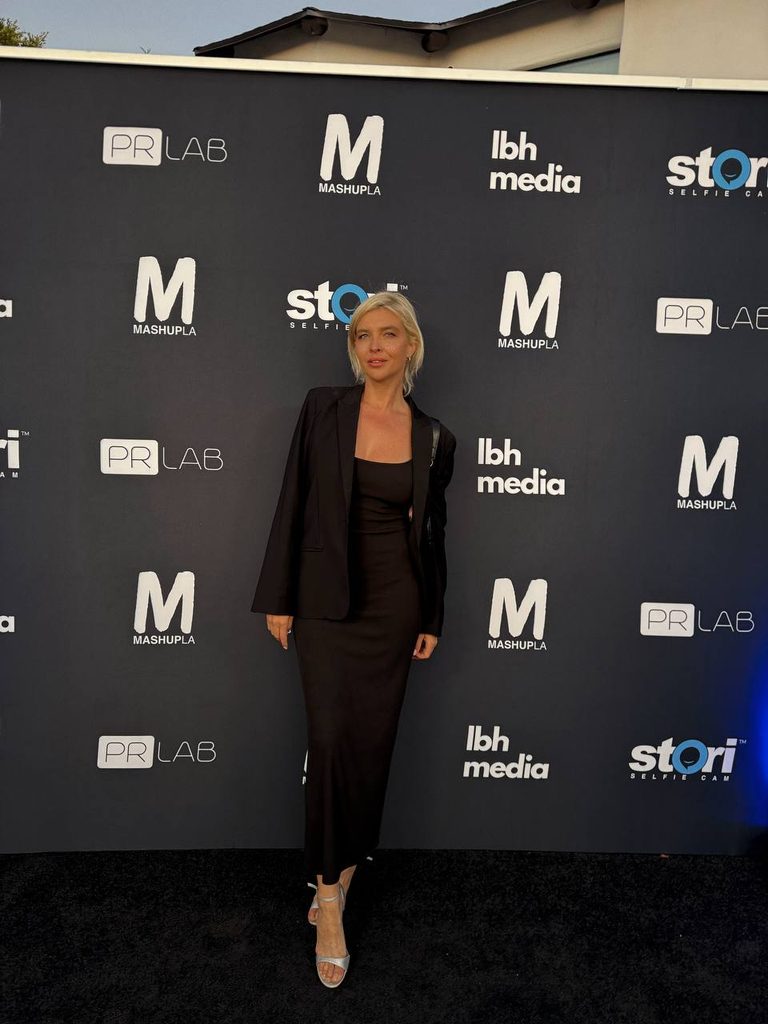
The change is also visible in the subjects Sizyh writes about publicly.
Her LinkedIn has gradually become something of a working notebook, where observations about technology, entertainment and business sit next to one another and often begin with events that, at first glance, have little to do with her professional background.
One recent essay grew out of the increasingly alarming public conversation around advanced artificial intelligence.
Sizyh was not trying to settle the technical argument about how dangerous future AI systems might become. Instead, after years spent thinking about positioning, she noticed another layer to the conversation: what happens to the market position of a company that becomes closely associated with understanding — and publicly articulating — the danger?
“You don’t necessarily need to manufacture a fear,” she wrote. “You just need to be the company that looks smartest while explaining it.”
Her point was not that the fear itself was manufactured. The more interesting possibility, in her view, is that both things can be true at the same time: a technological risk can be genuine, while the public conversation around that risk can also create differentiation, attention and trust for the companies participating in it.
That tension is characteristic of the way Sizyh increasingly approaches business questions. Rather than choosing immediately between two explanations, she is interested in whether another system of incentives might be operating underneath the obvious one.
Then She Looked at Hollywood

Another essay started somewhere entirely different, with two creator-led films: Iron Lung and Obsession.
Sizyh was less interested in comparing the films themselves than in looking at the order in which the businesses around them were being built.
For much of Hollywood’s history, the sequence has been familiar: capital finances production, the industry assembles the project, distribution follows and then considerable resources may be spent persuading an audience to care. In that model, the audience often enters relatively late.
Creator-led entertainment can alter that sequence because, in some cases, the audience is already there.
Mark Fischbach, better known as Markiplier, had millions of people following his work long before Iron Lung. Curry Barker had similarly spent years developing an online audience before moving into feature filmmaking.
“The film wasn’t the beginning of the relationship,” Sizyh wrote. “It was the next chapter.”
That does not mean followers automatically become ticket buyers, nor does it mean creators suddenly have no need for studios, distribution or conventional marketing. What changes is the starting point: when an audience already exists, a creator has demonstrated something that a traditional project may have to spend heavily to discover — that a meaningful number of people already care.
From there, Sizyh’s question becomes less about cinema and more about business.
If a film can sit at the center of intellectual property, community, licensing, products and future projects, then an audience begins to look less like a marketing channel and more like infrastructure. The relevant question is no longer simply how many followers somebody has, but what can be built because those people are already there.
Being Judged, Then Becoming the Judge
There is a similar reversal elsewhere in Sizyh’s career.
Earlier work she was involved in went before industry juries; years later, she returned to the Silver Mercury International Festival as a judge herself, evaluating work across areas including strategy, creativity, execution, effectiveness and measurable results.
She later served as a startup judge at The Ventures, where the context was different but many of the underlying questions were familiar: positioning, go-to-market strategy, market readiness, scalability, competitive advantage and long-term growth potential.
“When you’ve created something yourself, you know everything that happened behind it,” Sizyh says. “You know why certain decisions were made and what went wrong along the way. A judge doesn’t have access to that history, so eventually you have to deal with what is actually in front of you.”
That experience sharpened a distinction that now appears frequently in her advisory work:
“A great idea and an investable opportunity are not necessarily the same thing.”
A founder may understand a technology intimately while struggling to demonstrate why a meaningful market exists around it. A product may be impressive while the path to scale remains unclear, and founders can sometimes know so much about what they are building that they no longer notice how difficult it is for somebody outside the company to understand it.
Sizyh often reduces the problem to a fairly simple question: Can the idea survive contact with reality?
She applies similar reasoning to failure. “‘It didn’t work’ and ‘it didn’t work once’ are two very different statements,” she says, arguing that one failed attempt is information rather than a conclusion if what was learned from it materially changes the next decision.
What Happens Before Capital Arrives
This is where Sizyh’s earlier career and her current work begin to overlap.
Investors obviously do not invest in positioning alone. Market size, economics, product quality, defensibility, the team and its ability to execute matter considerably more than an elegant narrative. But investors also face an unusual problem: they have to make decisions about a future they cannot inspect directly, which means they are constantly inferring what might happen tomorrow from evidence that exists today.
“If an opportunity is difficult to understand, it becomes difficult to evaluate,” Sizyh says. “Clarity doesn’t create value that isn’t there, but it can determine whether somebody gets close enough to see the value that is.”
When she works with companies preparing for growth or conversations around capital, she therefore prefers not to begin with the investor deck. The more useful starting point is often underneath it: what the company actually does, why the timing matters, where its advantage comes from, what happens when it enters another market, and which parts of the story are supported by evidence rather than assumption.
Some of that thinking was shaped by working internationally. During a fintech launch across 12 markets, Sizyh saw how something that appeared obvious or credible in one country could be interpreted quite differently somewhere else.
Localization, she realized, was not simply a question of language.
“Products travel pretty easily,” she says. “Trust doesn’t.”
Different markets have different relationships with technology, money, institutions and risk, which means that the company can remain exactly the same while the meaning attached to it changes. For a business expanding internationally, understanding that interpretation can matter almost as much as translating the product itself.
The Identity Question Never Really Went Away

There is a reason much of Sizyh’s current thinking still traces back to perception.
Earlier in her career, identity was largely a practical marketing problem: the company already existed, and the work was to determine how people should understand it.
Over time, the question expanded.
Sizyh now uses the term The Identity Economy for a broader idea she has been developing around the way recognition, reputation and trust can influence economic opportunity.
Artificial intelligence makes that question harder to ignore because many of the visible signals businesses once relied on are becoming easier to produce. A professional-looking website is easy to build. So is a deck. Content, research, images and early prototypes can all be produced faster and at dramatically lower cost than before.
As the surface becomes cheaper to manufacture, Sizyh is increasingly interested in what happens to the value of the things underneath it.
“AI can produce an extraordinary amount of output,” she says. “But output and evidence aren’t the same thing.”
If almost anyone can look polished, polish tells us less than it once did. People begin looking for other signals: judgment, a history of execution, reputation, relationships, whether other credible people already trust someone, and whether previous promises survived contact with reality.
This is where Sizyh’s earlier interest in identity has ended up somewhere she did not originally expect — not simply in branding, but in economics.
When production becomes cheap, trust becomes expensive.
Stepping Outside the System
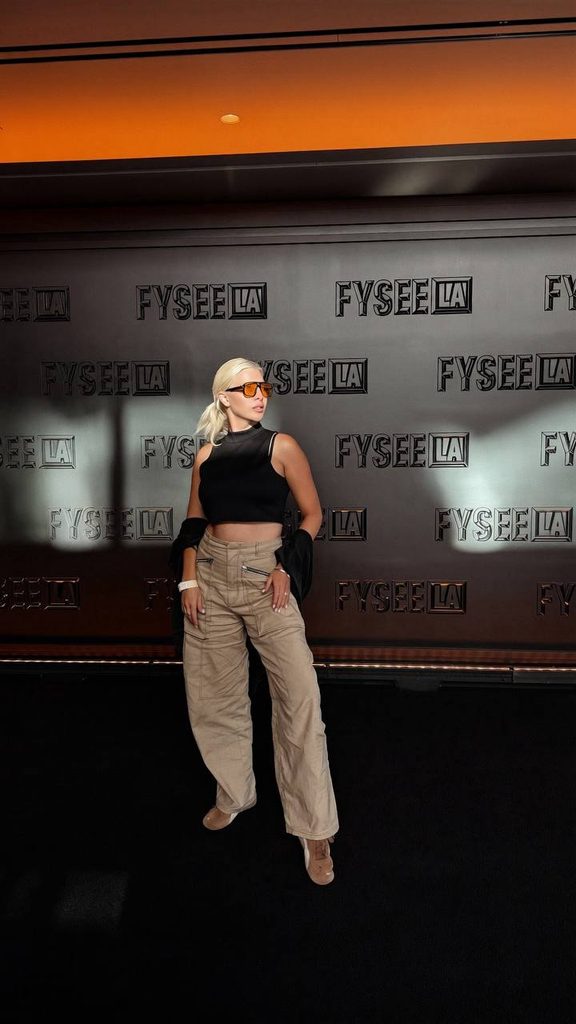
There was no single moment when Sizyh stopped being a marketer and became an advisor, and perhaps that is the wrong way to understand the progression anyway.
Journalism taught her to observe how people make sense of information; advertising showed her how perception could be shaped, while building and eventually selling an agency made the consequences of those ideas personal. Judging other people’s work forced her to evaluate what was actually in front of her without access to the intentions behind it, and strategic advisory moved her closer to the decisions that happen before a story is ready to be told at all.
That may explain why her writing now moves so easily between subjects that appear unrelated.
An AI safety debate becomes a question about incentives and positioning. A creator-led film raises questions about distribution economics. International expansion becomes a problem of trust. A startup pitch becomes a question about how people interpret an uncertain future.
The subjects change, but Sizyh keeps returning to roughly the same instinct: looking past the most visible explanation to understand the structure underneath it.
After years spent helping companies decide what story they should tell, she seems increasingly interested in the question that comes before the story:
Why did this particular story become valuable in the first place?
Sometimes, seeing that requires standing just far enough outside the system.