

For decades, filmmaking has been an expensive form of storytelling.
A strong idea was only the beginning. Turning it into something audiences could actually watch often required cameras, locations, actors, production crews, post-production teams and significant financing.
Artificial intelligence is beginning to change that equation.
Today, an independent creator can develop visual concepts, prototype scenes, build environments and experiment with cinematic storytelling using resources that would have been difficult to imagine only a few years ago.
That shift is creating new possibilities for people who may never have considered themselves filmmakers.
But access to the tools is only the beginning.
The bigger challenge is turning that access into something sustainable.
That question will be at the center of LA AI Film Summit 2026, taking place October 24 at City Club Los Angeles and bringing together creators, filmmakers, producers, entrepreneurs and technology professionals to explore how AI is reshaping creative work.
“AI is opening the door for people who previously may not have had the resources to bring their ideas to the screen,” said Chantel Chang, Co-Founder and CMO of LA AI Film Summit. “But having access to the tools and building a meaningful creative career are two very different things. We want to help creators understand what comes next.”
A Smaller Team Can Now Think Bigger
One of the most significant changes created by generative technology is not simply what AI can produce.
It is what a smaller team can attempt.
Independent filmmakers and solo creators can now explore ideas that once may have been abandoned because they were too expensive or technically difficult to visualize.
A creator can test an environment before building it. A small team can develop an early concept without immediately committing to a full production budget. Artists from different disciplines can experiment with filmmaking without first entering a traditional studio system.
That does not mean AI eliminates the need for production professionals.
Instead, it is beginning to change where time, money and human talent are used.
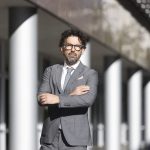
For Hideaki Kuo, an entrepreneur, investor, film investor and Co-Founder of the Summit, that shift could create an entirely new layer of creative entrepreneurship.
Kuo, who is also the founder of AI venture Aiscenix, sees an opportunity for smaller studios, independent creators and hybrid teams to build businesses around capabilities that were previously concentrated inside much larger organizations.
“When the cost of experimenting comes down, more people can participate,” Kuo said. “The important question then becomes whether those creators can turn that opportunity into something sustainable.”
That could mean new production companies, independent intellectual property, specialized creative services or entirely new roles built around AI-assisted workflows.
The technology may democratize access.
The market still determines what survives.
The New Filmmaker May Come From Somewhere Else
The people entering this new creative landscape do not always have traditional film backgrounds.
Some are directors and producers incorporating AI into existing workflows.
Others come from animation, design, advertising, photography, gaming, technology or social media.
Some are making films for the first time.
That matters because filmmaking has historically had significant barriers to entry — not only financial barriers, but also geographic and professional ones.
Generative tools do not remove those barriers entirely, but they can give more creators the ability to show what they are capable of before they have access to traditional industry resources.
Jenny Liu, a producer, director, creative executive and Co-Founder of the Summit, sees that accessibility as an opportunity — but not a substitute for creative discipline.
A tool can help a filmmaker visualize an idea faster.
It cannot decide whether the idea is worth pursuing.
It cannot replace taste, emotional judgment or the ability to understand why an audience should care.
As production tools become easier to access, those qualities may become more important, not less.
Making Something Is Different From Building Something
That distinction is reflected in how LA AI Film Summit has structured its program.
Rather than focusing entirely on how to generate content, the Summit is organized around four stages:
MAKE IT. BUILD A CAREER. SELL IT. OWN IT.
The first addresses the creative process itself — including production-ready workflows, visual consistency, directing, editing and post-production.
The next three address what many emerging creators discover after making their first strong piece of work.
How do you position yourself professionally?
How do you find collaborators and clients?
How does a film reach an audience?
How do creators make money?
And who ultimately owns the work?
Those questions become particularly important as AI-assisted projects move from online experimentation toward professional production and commercial markets.
David Johnson Chiang, a Co-Founder whose background spans film investment and production, intellectual property and international entertainment, brings that perspective to the Summit.
For creators hoping to build long-term value, Chiang sees ownership and commercialization as part of the creative journey rather than an afterthought.
A successful project can become more than a film.
It can become intellectual property.
And understanding contracts, licensing, distribution and rights may determine how much of that value the creator ultimately keeps.
Hundreds of Creators Are Already Testing the Possibilities
The growth of this emerging community can already be seen through the Tyrannus Angel Awards, which will be presented in conjunction with the Summit.
Hundreds of submissions have been received from creators around the world, with selected finalist works scheduled to screen during the October event.
The range of participation reflects a broader change taking place across creative industries.
As the technical threshold for making visual work falls, more people can attempt to tell stories on screen.
The challenge shifts from gaining access to proving value.
Can the work hold attention?
Can it create emotion?
Does the creator have a recognizable point of view?
Can the project find an audience?
Those questions existed long before artificial intelligence.
AI simply allows more people to confront them.
Access Is Expanding. Opportunity Still Has to Be Built.
There is a temptation to describe AI filmmaking as a shortcut.
That misses much of what is actually changing.
AI may shorten certain production processes. It may allow smaller teams to move faster. It may help creators visualize ideas they previously could not afford to attempt.
But it does not automatically create a career, an audience or a business.
Those still have to be built.
For Chantel Chang, whose work on the Summit spans brand strategy, partnerships and industry development, that is why bringing creators together with people from outside the AI community matters.
“The goal is not to create another room where everyone already knows the same tools,” Chang said. “We want creators to meet filmmakers, producers, business leaders and industry professionals who can help expand what happens after the work is created.”
That may ultimately be one of the biggest changes AI brings to filmmaking.
Not that machines will suddenly make everyone a filmmaker.
But that more people will have the opportunity to prove whether they can become one.
LA AI Film Summit 2026 will take place on October 24, 2026, from 1:00 p.m. to 6:00 p.m. at City Club Los Angeles, featuring industry panels, a Creator Lab, film screenings, networking and the Tyrannus Angel Awards.
More information is available at aifilmsummit.com.