
Most inefficiencies in energy networks go unnoticed until they’ve already caused damage. These issues often remain hidden for a long time, and by the time they’re discovered, the disruption, resource wastage, and repairs have already occurred. When AI is paired with the right technology, it makes it possible to catch irregularities in real time before they turn into damage. This is the shift from reacting to problems to anticipating them, and it reflects how SureFlow approaches resource management.
SureFlow specializes in AI-based IoT sensors for smart utility monitoring. Our approach is built around three core pillars: retrofit technology that works with existing infrastructure, compact sensor design that makes it easy to ship, and AI-powered insights that turn raw consumption data into clear, actionable information for households, businesses, and cities. Together, these provide continuous visibility into how water, gas, and electricity are used, along with early warnings of faults and inefficiencies.
The infrastructure is already there. What’s been missing is the ability to understand it, and to act on that understanding before small issues become larger ones.
This is especially relevant for cities, which are increasingly working to meet sustainability and efficiency targets without the time or budget to overhaul their existing infrastructure. Modernizing a city doesn’t require replacing the infrastructure; the solution lies in retrofit technology that works with what’s already there. I believe our greatest potential lies in helping cities participate in a wide range of programs, from water conservation and energy efficiency to smart infrastructure planning and resource management initiatives. This helps them track progress toward the goals by extending the value of their existing systems and bringing visibility to households, businesses, and communities alike.

Real-time visibility gives cities and households alike a clear view of how resources are actually being used, making it easier to identify unnoticed water leaks, inefficient energy use, or rising costs before they become larger problems. At SureFlow, this is exactly where our focus extends beyond city-scale programs, bringing that same level of insight down to individual households.
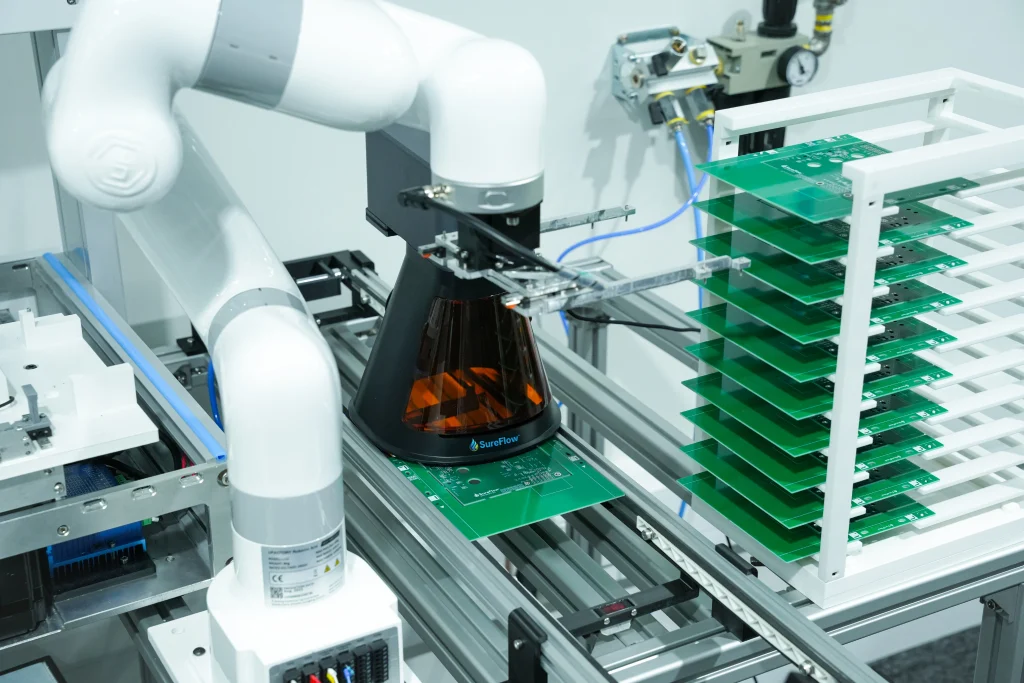
As cities work toward broader adoption of electric vehicles, one of the main challenges is the additional strain that charging places on the power grid. SureFlow’s SureFlow EV Adapter helps solve this problem at the charging point. It is a small adapter that works with any existing EV charger, so cities and utilities do not have to replace their current charging stations or infrastructure. SureFlow EV Adapter tracks charging activity in real time, with AI identifying the most efficient charging windows to shift demand away from peak hours and to charge when excess energy is available on the grid. This gives cities and utilities a practical way to manage grid stress as more vehicles connect. For utilities managing many EVs across a network, SureFlow EV Adapter makes it easier to coordinate charging without overloading local grids, consistent with SureFlow’s broader focus on extending what already exists rather than replacing it.
A meaningful shift toward smarter cities depends not only on advanced technologies but also on how easily those technologies can be deployed at scale. At SureFlow, devices are designed to be simple enough to install without specialized technicians or infrastructure upgrades, enabling faster expansion of coverage across a city’s networks, homes, and businesses. For cities pursuing long-term efficiency and sustainability, this kind of scalability often determines whether an initiative delivers measurable results.
Infrastructure doesn’t need to be rebuilt to be understood. What it needs is an intelligent layer that helps cities, utilities, and households monitor conditions and address issues before they escalate. That’s the role SureFlow aims to play, not replacing what already exists, but making it work smarter through real-time insight.
Read More: John Sotter’s Mission to Make America’s Floors Safer Through Science and Engineering