
Paul Bennett’s daughters needed teachers who could teach them wherever they were. A video call near Papua New Guinea has led to the creation of a new education company.
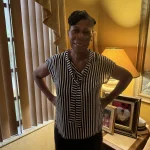
The first meeting took place over a dodgy internet connection somewhere off Papua New Guinea. Paul Bennett, his wife Lani Bevacqua, and their three daughters were sailing on their boat, Dafne. They set up a video call with educator Hadley Westman, looking for a way to keep school going as the family continued to move. Other teachers eventually joined them, and the girls began to study subjects appropriate to their various stages of education.
Cleo was studying marine science with a biologist, and the ocean was just outside the boat. Stella, a high-school senior, worked on college essays with a literature teacher. Jade was studying Latin.
From Family Experiment to Education Company
Bennett had previously worked with expert-led learning. He co-founded Context Travel, a company that organizes educational experiences with experts in the cities where travelers go. He hired private teachers for his daughters and used that experience to solve a problem his own family had faced.
Instruction in traditional schools is typically arranged around an academic calendar and a class progressing through the curriculum together. This works well for many students, but it is harder to accommodate a child who wants to study a subject in depth or a family that moves to another country mid-year.
The Bennetts’ experience was the birth of Cicero Learning. It links families with private teachers who create courses designed around the individual student, including those following an established curriculum.
What Happens Before a Cicero Course Begins
The company starts with a chat about what the child is studying and what the family wants out of the course. Cicero then suggests potential teacher matches. Once a teacher is chosen, lessons can be tailored to the student’s previous knowledge, and the pace can be modified as work progresses.
The teacher can follow the curriculum that the student will need when they return to conventional school after a year abroad. A learner preparing for an AP exam has different needs.
Cicero also offers courses selected primarily because a student wants to pursue them, not because they are part of a required curriculum.
The company says it checks teachers’ knowledge and experience with students. When a teacher works with a student for a few months, they can tell when the student has trouble with part of the material. The instructor can go back through that part of the course since they aren’t trying to keep an entire class on track. Cicero says families can switch teachers if it’s not a good fit.
Research on Individualized Instruction
Benjamin Bloom’s 1984 paper, The 2 Sigma Problem, discussed experiments comparing classroom teaching with individual tutoring. In the studies he reviewed, students who received tutoring performed roughly two standard deviations better than the regular classroom group.
The experiments were short, with three weeks of instruction in either probability or cartography.
The tutoring also featured testing and corrective feedback, so it wasn’t simply a comparison between a large class and a private conversation. Neither was it an appraisal of Cicero, which did not yet exist.
Keep Learning When the Family Moves
Cicero helps families pursuing homeschooling and worldschooling, especially those who want to keep their children’s lessons going while traveling or working remotely. Cicero primarily works with learners ages 10 to 18. Remote instruction doesn’t remove the need to coordinate schedules or find a reliable internet connection. It does, however, enable students to keep working with a familiar teacher when the family moves.
Its programs are accredited by Cognia, says Cicero. Cicero also reports former learners have gone on to the University of Chicago and Cambridge, among other schools. Those destinations are individual examples, not a measure of academic outcomes for all its learners.
Bennett wants to expand Cicero’s one-to-one learning model to 5,000 learners. To hit that benchmark, the company would need more teachers willing to build out courses for individual students and maintain those relationships over time.