
The latest Strait of Hormuz blockade update today shows a deeply unstable situation. Global energy markets are facing their toughest test in decades. After peace talks in Islamabad fell apart, this key waterway has become a major flashpoint. Iran’s Revolutionary Guard (IRGC) continues to target neutral vessels. Meanwhile, the United States runs a strict naval blockade on Iranian ports. Every ship that passes through the strait now faces serious risk.
- Brent Crude price per barrel today is $105.63
- 20% of the world’s oil passes through Hormuz
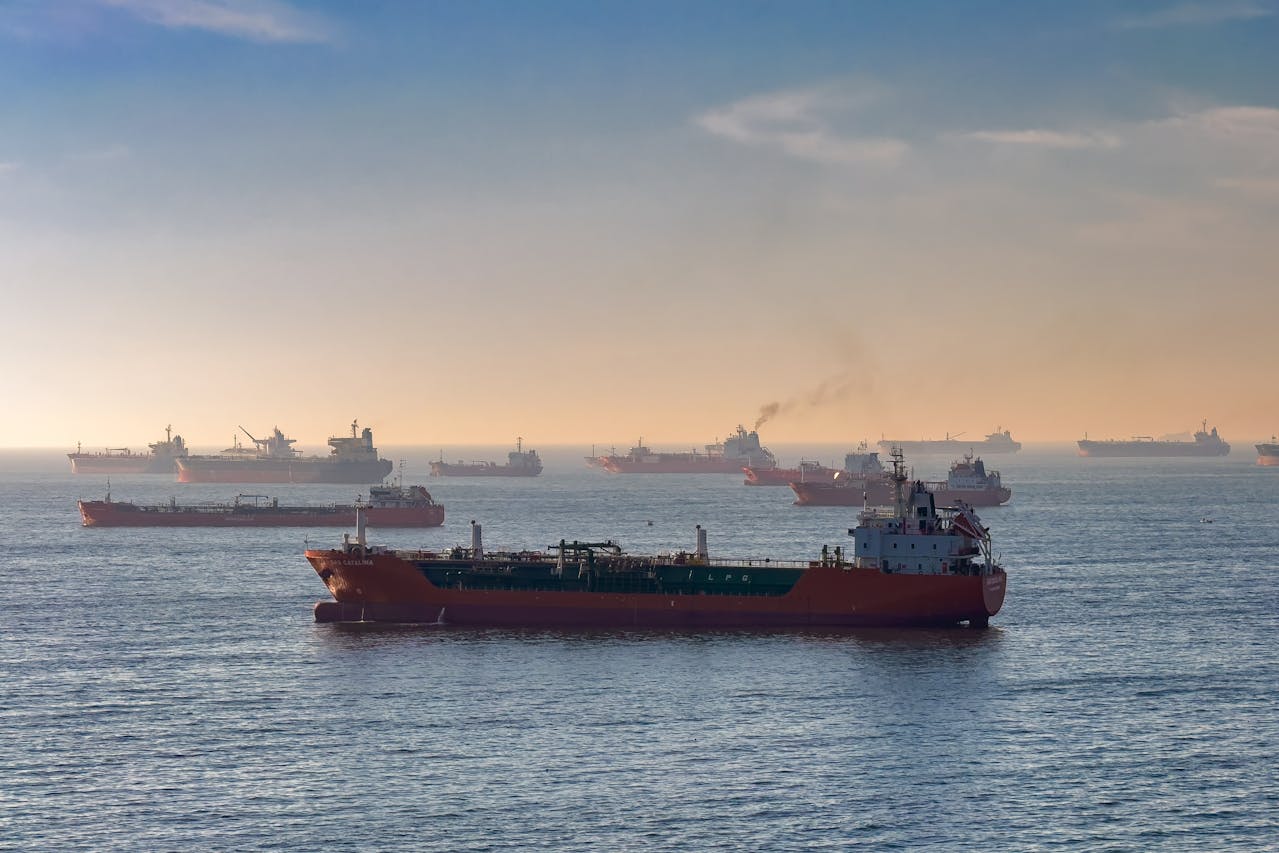
- 150+ tankers anchored outside the strait
- 30+ countries meeting to plan a response
Why Are Oil Prices Climbing So Fast?
Energy markets are reacting quickly to the growing tension. This morning, Brent Crude jumped to $105.63 per barrel. This sharp rise followed reports that three container ships were attacked near Oman. As a result, insurance costs for tankers have hit record highs. Many shipping firms now find it almost impossible to justify the financial risk of sailing through the strait.
Furthermore, oil analysts warn that prices could climb even higher if the blockade continues for more than two weeks. This is because energy buyers across Asia and Europe are already scrambling for alternative supply routes.
The “Double Blockade,” How the US and Iran Are Each Blocking the Other
The conflict has grown into a rare “double blockade” situation. On one side, the US Navy intercepts Iranian-linked cargo ships to cut off Tehran’s income. On the other side, Iran uses drones, sea mines, and GPS satellite spoofing to push Western-aligned ships away. This standoff has caused over 150 tankers to anchor outside the strait while they wait for safe passage, a wait that shows no sign of ending soon.
Consequently, this “gunboat diplomacy” is creating massive delays in global fuel deliveries. Shipping analysts describe the situation as unlike anything seen since the Gulf War tanker crisis of the 1980s.
Read More: Why Japan Is Increasing Defense Spending in 2026
How This Crisis Is Hitting the World Economy?
This is not just a regional problem. Because the Strait of Hormuz carries roughly 20% of the world’s oil and liquefied natural gas (LNG), the current disruption is causing a global energy supply chain crisis.
| ✈️ Airlines Major carriers like United Airlines have already raised fares by 20% to cover higher fuel costs. | 🚢 Logistics Multinational forces from 30+ countries are meeting in London to plan a “freedom of navigation” mission. |
| 🌾 Food Prices The UN warns that food and fertilizer prices are rising worldwide as ships avoid the region. | ⚡ Energy Security European and Asian nations are activating emergency oil reserves and seeking alternative suppliers. |
Timeline of Recent Attacks in the Strait
Reports from the UK Maritime Trade Operations (UKMTO) confirm that seafarers are now facing extreme danger. Here is a short timeline of what has happened:
- This Wednesday
An IRGC gunboat fired on a container ship off the Oman coast, causing serious damage to the ship’s bridge.
- Last Week
Iranian forces captured two merchant ships, accusing them of violating local blockade rules.
- Current Status
Iran has reportedly started charging “tolls” of over $1 million per ship for safe passage, a move the US has called maritime piracy.
Read More: Middle East War Impact on Global Supply Chains: 2026
What Happens Next? Will the Strait Re-Open?
Military experts say that normal shipping traffic will only return after a lasting ceasefire is agreed. France and the UK are both ready to lead mine-clearing operations in the waterway. However, these efforts cannot begin until the ongoing air threat is reduced.
| Scenario | Likelihood | Impact on Oil Prices |
| Ceasefire reached within 30 days | Moderate | Prices drop back to ~$85/barrel |
| Blockade continues for 60+ days | Growing | Prices could exceed $130/barrel |
| Military escalation by US or Iran | Low but rising | Potential spike above $150/barrel |
| UN-brokered neutral zone agreement | Uncertain | Gradual stabilization over weeks |
In addition, the International Energy Agency (IEA) has urged member nations to prepare emergency oil release plans. Notably, countries like Japan, South Korea, and India – which rely heavily on Gulf oil, have already begun reviewing alternative routes around Africa’s Cape of Good Hope, even though this adds weeks to delivery times.
Quick Facts: Strait of Hormuz at a Glance
| Detail | Fact |
| Location | Between Iran and Oman, connecting the Persian Gulf to the Gulf of Oman |
| Width at narrowest point | Approximately 21 miles (33 km) |
| Daily oil flow | Around 17-21 million barrels per day |
| Key countries affected | USA, China, Japan, India, South Korea, EU nations |
| Alternative route | Cape of Good Hope (adds 10-15 days to transit time) |
The Strait of Hormuz blockade update today is a clear warning to the world. Our global trade system is more fragile than most people realize. One disputed waterway, just 21 miles wide at its narrowest point, can push oil prices above $100 a barrel, raise your airline ticket prices, and create food shortages on the other side of the planet. Until a genuine ceasefire is reached, the world will keep watching this flashpoint with growing concern.
“Stay informed on the latest global energy and geopolitical news. Get the Latest Update”
Read More: UN Emergency Meeting on Global Inflation: What It Means for You in 2026