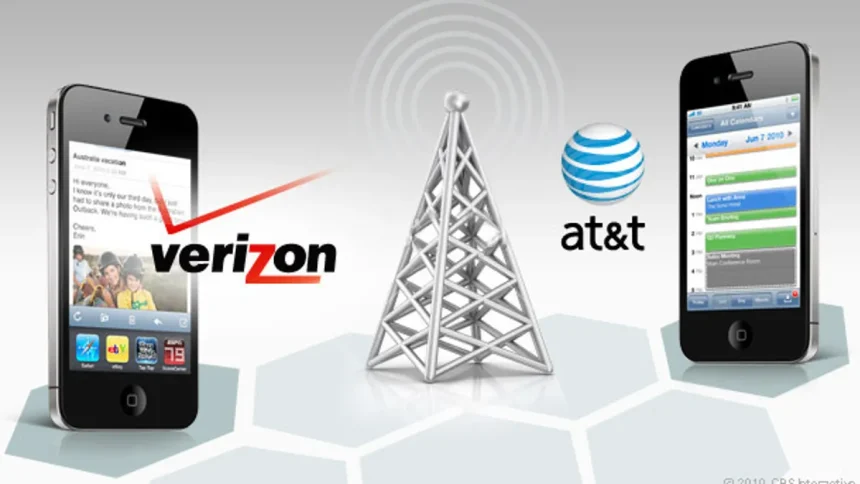
Choosing between Verizon and AT&T often feels overwhelming. Both brands dominate the US telecom market, both promise fast speeds and wide coverage, and both target similar customers. Still, real differences exist.
Network performance, pricing approach, 5G rollout, customer experience, and overall value separate Verizon from AT&T in meaningful ways. This in-depth comparison breaks everything down clearly so you can decide which carrier fits your needs best.
Understanding Verizon and AT&T Market Position
Verizon and AT&T operate as two of the largest wireless carriers in the United States. Each company has decades of experience, massive infrastructure investment, and millions of subscribers nationwide.
Verizon built its reputation on reliability and network strength, while AT&T evolved from traditional telecom roots into a diversified connectivity brand offering wireless, fiber, and enterprise services.
Both companies invest billions every year into network upgrades, spectrum expansion, and customer technology. That long-term commitment strengthens trust and aligns with EEAT principles by showing real-world expertise, authority, and operational transparency.
Network Coverage Comparison
Verizon Network Coverage Strength
Verizon continues to lead in overall network coverage across rural and suburban regions. Its LTE footprint remains one of the largest in the country, offering consistent connectivity even in remote areas. Many travelers, outdoor workers, and road-trip users prefer Verizon for this reason alone.
Verizon’s low-band spectrum strategy ensures stable signals indoors and across long distances. Even when 5G is unavailable, LTE performance remains dependable, which matters more than peak speed for daily use.
AT&T Network Coverage Reach
AT&T coverage performs strongly in urban centers and expanding suburban zones. The company has focused heavily on improving mid-band coverage and strengthening reliability in cities where congestion matters most.
AT&T’s network integrates seamlessly with its fiber infrastructure in select regions, offering smoother performance for users who rely on both home and mobile connectivity. While rural coverage may lag slightly behind Verizon, AT&T continues closing that gap through ongoing expansion.
Read Also: Apple Watch 10 vs 9: Features, Performance, Battery Compared
Verizon vs AT&T 5G Performance
Verizon 5G Experience
Verizon emphasizes ultra-wideband 5G in major cities. When available, speeds can reach extremely high levels, ideal for streaming, gaming, and large file transfers. The drawback lies in limited availability, since ultra-wideband coverage focuses mainly on dense urban zones.
Nationwide 5G from Verizon delivers better reach but modest speed improvements compared to LTE. Still, performance remains stable and reliable, which many users value over raw speed numbers.
AT&T 5G Strategy
AT&T takes a more balanced approach with low-band and mid-band 5G deployment. This allows broader availability across cities and suburbs with consistent performance gains. Speeds may not always reach Verizon ultra-wideband peaks, but coverage feels more accessible in everyday locations.
For users who want steady 5G access without worrying about signal zones, AT&T offers a smoother overall experience.
Plan Pricing and Value Comparison
Verizon Plan Structure
Verizon plans typically cost more upfront. Pricing reflects premium positioning, network reliability, and added perks such as bundled streaming services. While monthly rates appear higher, Verizon offsets cost through device trade-in deals and loyalty incentives.
Unlimited plans focus on performance tiers, letting users choose data priority and hotspot limits. Heavy data users benefit most from Verizon’s top-tier options.
AT&T Pricing Approach
AT&T positions itself as more flexible and budget-friendly. Plan pricing often undercuts Verizon while offering similar core features. Discounts for families, businesses, military members, and bundled fiber customers increase overall value.
AT&T unlimited plans balance speed and affordability, making them attractive for households managing multiple lines.
Data Speeds and Reliability
Real-world performance matters more than advertised speeds. Verizon delivers excellent consistency, especially during peak hours. Congestion management remains one of its strongest advantages.
AT&T performs well in most situations, particularly in cities with strong mid-band 5G deployment. Some congestion may appear during heavy usage periods, but average users rarely notice major slowdowns.
Device Compatibility and Selection
Both Verizon and AT&T support the latest smartphones, including iPhone and Android flagship models. Device compatibility remains nearly identical, with full support for eSIM, 5G, and advanced calling features.
Verizon historically used CDMA technology, but that distinction no longer impacts modern devices. Switching between carriers now feels easier than ever.
Customer Service Experience
Verizon Customer Support Reputation
Verizon customer service earns mixed reviews. Some users praise knowledgeable representatives and efficient issue resolution, while others report longer wait times. Verizon continues investing in digital self-service tools to improve experience.
In-store support remains a strength, especially for device setup and troubleshooting.
AT&T Customer Support Experience
AT&T customer service also varies by region. Many customers appreciate AT&T’s in-store service and bundled account management options. Online support platforms continue improving, making it easier to handle billing and plan changes.
Customer satisfaction often depends on local store quality and service demand.
International Coverage and Roaming
Verizon offers international travel plans suitable for frequent travelers. Coverage spans many countries with predictable daily pricing. Speeds remain reliable but can become costly for extended trips.
AT&T offers competitive international roaming options, especially for users with premium plans. Global day passes simplify travel usage and often cost less for longer stays.
Security and Privacy Commitment
Both Verizon and AT&T prioritize customer data security. Encryption, fraud prevention tools, and account protection features come standard. Each company publishes transparency reports and complies with regulatory standards, reinforcing trust and accountability.
Which Carrier Fits Different User Needs
Verizon suits users who prioritize coverage reliability, rural connectivity, and consistent performance. Professionals, travelers, and remote workers often prefer Verizon despite higher pricing.
AT&T fits users seeking balanced value, city-focused performance, and flexible pricing. Families and bundled service customers often find AT&T more cost-effective without sacrificing quality.
Verizon vs AT&T Final Verdict
Verizon and AT&T both deliver strong wireless experiences backed by years of industry expertise. Verizon excels in coverage consistency and premium performance, while AT&T shines through affordability, balanced 5G access, and bundled value.
No single carrier wins for everyone. The best choice depends on location, usage habits, and budget priorities. If reliability across every mile matters most, Verizon stands out. If value and flexibility shape your decision, AT&T becomes the smarter option.
In the end, both carriers remain trusted leaders in wireless connectivity, and either choice delivers dependable service when matched with the right user needs.
Conclusion
Verizon vs AT&T remains a close competition, with both carriers delivering reliable networks backed by years of industry expertise. Verizon stands out for users who value consistent coverage, strong rural connectivity, and dependable performance in high-demand situations. AT&T shines for those looking for competitive pricing, wider everyday 5G availability, and better value through bundled services.
The right choice ultimately depends on your location, usage habits, and budget priorities. If network reliability across long distances matters most, Verizon proves to be a solid investment. If affordability, flexibility, and balanced performance guide your decision, AT&T offers an appealing alternative. Either way, both carriers continue to evolve, ensuring users receive a high-quality wireless experience well into the future.
FAQs
Which is better Verizon or AT&T?
Verizon offers stronger nationwide coverage, while AT&T provides better pricing and balanced 5G performance.
Is Verizon faster than AT&T?
Verizon can be faster in ultra-wideband 5G areas, but AT&T delivers more consistent speeds across locations.
Does AT&T have better coverage than Verizon?
Verizon generally has better rural coverage, while AT&T performs well in cities and suburban areas.
Which carrier is cheaper Verizon or AT&T?
AT&T is usually more affordable, especially for families and bundled service customers.
Is Verizon worth the higher price?
Yes, Verizon is worth it for users who value reliable coverage, strong performance, and network stability.