
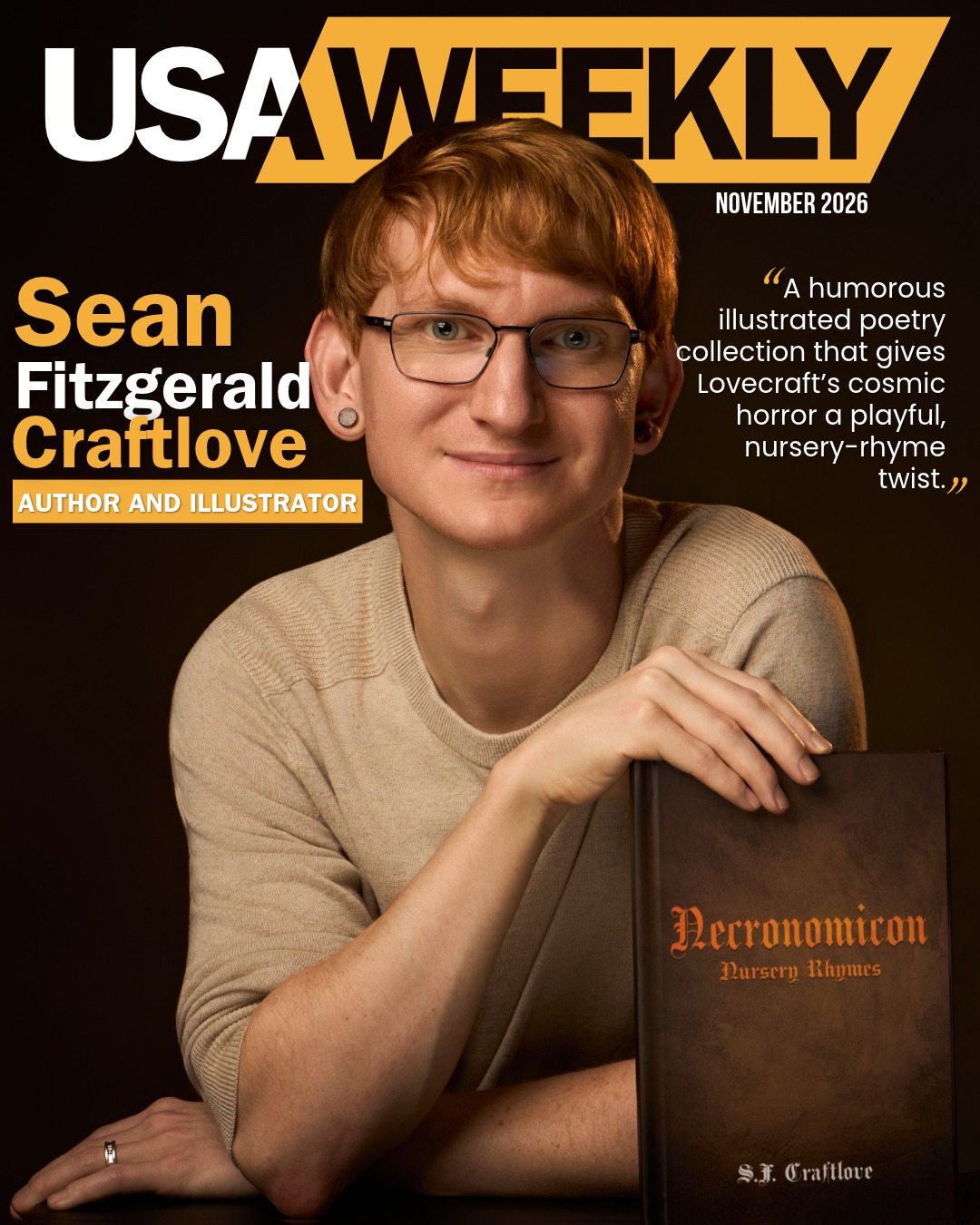
There is a particular thrill in watching a book misbehave on purpose. Necronomicon Nursery Rhymes, the new illustrated collection by S. F. Craftlove, arrives dressed in the solemn robes of forbidden scholarship: parchment-toned pages, mock-ancient typography, a title that sounds as if it should be chained to a lectern in a locked university archive. Then it promptly sticks a bow on a tentacled monster’s head.
That collision is the book’s central joke, and also its strange sweetness. Craftlove has made a children’s-style rhyme book out of cosmic horror, not by sanding off the weirdness, exactly, but by turning dread sideways until it becomes play. The Great Old Ones and their dreadful kin are not merely things to fear here. They run baths, offer swimming lessons, host snow days, lounge on couches, and appear in the classroom with the casual authority of a very peculiar show-and-tell guest. The result is a book that feels less like parody than reclamation: a nursery shelf invaded by the abyss, and somehow improved by the visit.
The book announces its intentions early, in a “Letter to the Reader” that warns us not to trust inherited terror. “Not all these creatures have it out for mankind,” the narrator insists; some may even be “helpful and kind.” It is a wonderfully funny premise because it plays against one of horror’s most durable reflexes: the assumption that the unknown must be hostile. Craftlove’s book asks, with a wink and a tiny shiver, what might happen if the monster under the bed were simply working the night shift.
What makes the collection work is not merely the gag of making eldritch beings cute. The stronger pleasure is formal. Craftlove borrows the cadences of nursery verse, including repetition, sing-song rhyme, bedtime rhythms, and schoolyard bounce, and lets them rub against mythos vocabulary that was never meant to sit comfortably in a child’s mouth. Names like Azathoth, Dagon, Nyarlathotep, and Yog-Sothoth become comic percussion. They are grand, difficult, faintly ridiculous sounds, and the poems understand that. The book does not deflate them so much as domesticate them, placing the cosmic beside the ordinary until both become newly funny.
The illustrations deepen that tonal trick. The creatures are not rendered as plush toys or sanitized mascots; they remain lumpy, many-eyed, finned, horned, oozy, or vaguely impossible. Yet the drawings give them the blunt emotional legibility of picture-book characters. A green, tentacled figure can be alarming and endearing at once. A spider god can be both mythic and jump-rope adjacent. The art’s loose, cartoonish line keeps the book from becoming too precious, while the faux-aged paper and gothic display type preserve just enough occult theater to keep the joke alive.
There is a smart literary instinct beneath the silliness. Necronomicon Nursery Rhymes understands that much of H. P. Lovecraft’s imaginative power came from scale: the human mind shrinking before the ancient, the alien, the unknowable. Craftlove reverses the telescope. In these pages, the unknowable is still unknowable, but it may also be sleepy, bored, helpful, competitive, snack-oriented, or in need of praise. That reversal does not mock cosmic horror so much as reveal the absurdity already latent inside it. Any universe vast enough to contain annihilating gods is surely vast enough to contain bath time.
The best audience for Necronomicon Nursery Rhymes may be broader than its title suggests. Adult fans of horror will catch the references and enjoy the inversions. Parents with a taste for the macabre will appreciate a picture-book mode that refuses the sugary blandness of so much bedtime fare. Older children drawn to monsters may find its central lesson reassuring: difference is not the same as danger, and fear is not always wisdom. The book’s humor is sometimes dark, but it is rarely cruel. Its great comic achievement is that it treats terror as something that might be negotiated with, befriended, or at least invited to sit down before it destroys the furniture.
In an age when publishing often separates children’s whimsy and adult genre fandom into tidy market categories, Necronomicon Nursery Rhymes gleefully contaminates the shelves. It is a novelty book with genuine affection behind it, a comic homage that knows its source material well enough to bend it without breaking it. The abyss, it turns out, does not always stare back. Sometimes it waves. Sometimes it makes popcorn. Sometimes it reminds you to scrub behind your ears.