

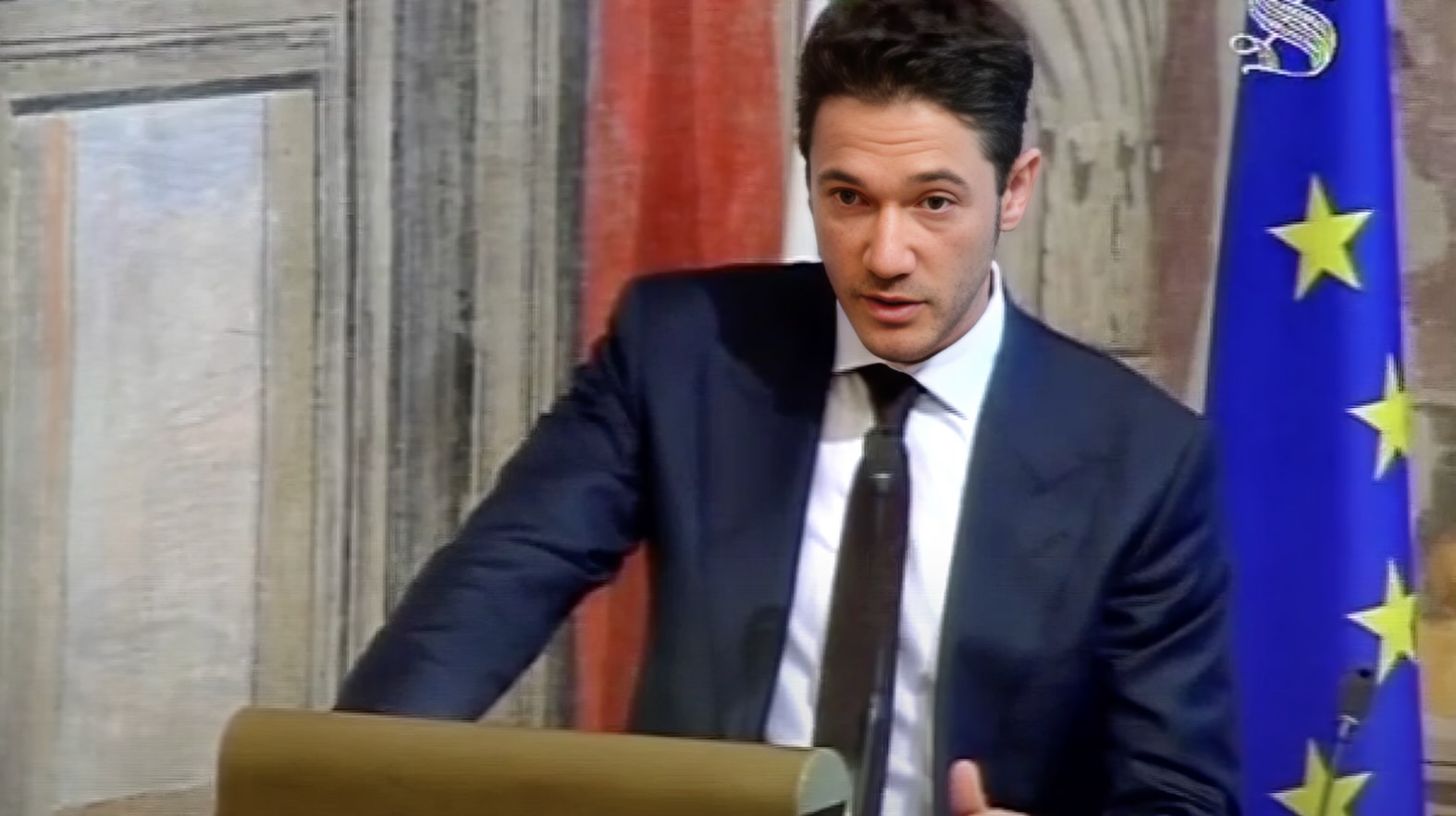
Siwar al-Assad’s relationship with Syria began before he had the language to explain it. He was born in Damascus in 1975, spent his early childhood there, and left the country with his family at nine. The move took him into a life shaped by European schools, new languages and unfamiliar surroundings. Syria, however, did not become a closed chapter. It remained present in memories, family history, language and, eventually, in the cultural work to which he would give much of his attention.
That early departure helps explain why Syria occupies a particular place in al-Assad’s life. His connection to the country is not simply a matter of birthplace, and it is not confined to the subjects of his books. It has influenced the questions he asks, the people he writes about and the causes that have drawn him beyond literature. Writing, media and cultural initiatives have taken him into different professional settings, but questions of identity, belonging and what survives disruption continue to connect them.
Memory became more complicated as he grew older. A child remembers a place through fragments: streets, sounds, family routines and particular scenes that may remain vivid even when the larger circumstances surrounding them become harder to reconstruct. Al-Assad has returned to that tension in his own writing about Syria. He left as a child and later encountered a country transformed by events he had not experienced from inside it. The Syria he remembered, and the Syria he came to know from abroad, could never be entirely the same.
His education took place largely in Europe. His biography records schooling in Switzerland and Great Britain before his study of law at Paris 1 Panthéon-Sorbonne. Those years placed him in environments where languages, histories and cultural assumptions met every day. They also gave him an international education long before his writing career developed that way.
Language became part of that experience. Al-Assad writes in French and English and also identifies Arabic and Spanish among the languages he speaks. He does not describe the change between his principal writing languages as a simple matter of translation. In a 2025 essay on writing characters from different backgrounds, he explained: “When I’m writing in French, I think differently than when I write in English.”
For him, the difference reaches into the writing itself. A language carries its own rhythm, associations and habits of expression. A memory may feel different when recalled in one language than another. For a writer whose life has crossed several cultural settings, those differences offer both opportunity and difficulty. They can widen the field of what he can express, while making him more conscious of what can be lost when one culture is rendered through another.
His fiction developed within that wider landscape. A Coeur Perdu, published in French in 2012, brought together romance, suspense and questions of moral responsibility. Le temps d’une saison moved into historical fiction, while later works such as Palmyre pour toujours and Damascus Has Fallen engaged more directly with Syrian memory and upheaval. The subjects and settings changed, but his interest in people facing difficult choices remained.
That consistency is easier to see when the books are considered as part of a longer writing life rather than as a list of titles. Al-Assad has moved between genres without treating his Syrian background as a restriction. A story can be set somewhere else and still explore questions of loyalty, memory, justice or belonging. A novel concerned with Syria does not have to explain the country to an outsider.
His approach to characters follows a similar logic. In his writing about different cultures, al-Assad has stressed the need to listen, research and resist turning people into familiar types. A writer may know a language or have lived in a particular environment without automatically understanding everyone within it. For al-Assad, familiarity with a culture is a starting point for research, not a substitute for it.
That attitude has particular relevance to someone whose own identity has developed across countries. Living between cultures can make certain differences easier to notice, but it can also expose the limits of what an outsider understands. Al-Assad’s writing draws from that position. He has spent much of his life outside Syria, yet he has continued to examine what it means to remain connected to a place after leaving it.
His public work eventually extended those questions beyond fiction. Media and public affairs gave him different audiences and different responsibilities. His career has therefore never been entirely literary. The writer has operated alongside a public figure concerned with Syrian affairs, cultural questions and the institutions through which those concerns can be addressed.
The humanitarian side of that work is particularly visible in his involvement with the Aramea Foundation. The organization’s current public material describes interests including Syrian refugees, education, humanitarian concerns, cultural heritage and post-conflict recovery. Those subjects connect closely with issues that have appeared in al-Assad’s writing: displacement, continuity and the difficulty of preserving a sense of belonging when ordinary structures have been broken.
His interest in cultural preservation adds another dimension. Heritage is often treated as something that can wait until immediate humanitarian needs are addressed. Al-Assad has approached the two concerns more closely. A damaged monument is physical loss, but it can also remove a shared reference point. Displacement creates practical problems, but it can also disrupt relationships between generations and the places through which family and community history are remembered.
Palmyra illustrates that connection particularly well. Al-Assad had seen the ancient city as a child, long before its destruction became an international symbol of the Syrian war. Years later, the damage gave an old memory a different weight. In his own account, that experience contributed to his decision to write Palmyre pour toujours. His 2025 discussion of writing and war describes the impulse behind that work as an attempt to write the city back into existence.
A novel cannot rebuild a temple, and al-Assad does not claim that it can. What writing can preserve is attention to what a place meant before its destruction became the dominant image associated with it. In that sense, cultural memory becomes part of the human story. The monument matters because people gave it meaning, remembered it and built parts of their identity around it.
The same concern appears in his broader thinking about Syria. From abroad, the country is often encountered through war, displacement and political headlines. Those accounts describe real events, but they can leave little room for the ordinary lives that existed before them and continued alongside them. Al-Assad’s writing has repeatedly sought that space.
His position is necessarily different from that of someone who remained in Syria throughout the conflict or fled under immediate threat. He left as a child and experienced the later transformation of the country from outside. That distance is neither something to hide nor something to turn into a claim of firsthand wartime experience. It is simply part of the perspective from which he writes and works.
Living abroad can also complicate the idea of home. Memory preserves some things and changes others. A remembered city can remain emotionally familiar even when the physical city has altered. The longer the separation, the more difficult it can become to distinguish the place one knew from the place that exists now. Al-Assad’s work repeatedly returns to that tension without resolving it neatly.
It is here that his humanitarian interests and his literary concerns meet. His interest in refugees relates to the disruption of ordinary life. His interest in education reflects the importance of institutions that give communities continuity. His concern for heritage recognizes that people also need connections to places, traditions and shared knowledge. None of these concerns can substitute for the others, but they belong to the same larger question of what a community needs after profound disruption.
The institutional setting also matters. Aramea’s public work extends across humanitarian, educational, cultural and recovery-related issues, reflecting the breadth of al-Assad’s own interests. His involvement gives those concerns a setting in which questions that begin in personal experience can be addressed at an organizational level.
The distinction is important because literature and humanitarian work have different purposes. A novel can give shape to a private experience. A humanitarian organization has to deal with practical needs. A cultural initiative may concentrate on preserving knowledge or heritage. Al-Assad’s interests have developed across all three areas, allowing the same questions to be approached from different directions.
His personal history also helps explain his sensitivity to identity as something that changes through experience. Damascus is part of his background, but so are the European environments in which he was educated, the languages in which he works and the professional worlds he entered later. None of these elements cancel the others. They sit alongside one another.
That combination has shaped the way he approaches writing. His characters do not need to represent a country, culture or political position in its entirety. They can be individuals with conflicting motives, incomplete knowledge and private histories. His stated writing philosophy reflects that preference. In a reflection on Syrian literature in English, he wrote, “I do not write to explain Syria. I write to portray individuals navigating reality.”
The statement also clarifies why his literary work cannot be separated entirely from his wider interests. A writer who begins with individuals can move between genres, countries and historical periods without abandoning the questions that matter to him. Memory can appear in a historical novel. Belonging can appear in a contemporary story. Syria can be present without becoming the only subject.
For al-Assad, identity works in much the same way. It is not simply inherited and left unchanged. It develops through movement, education, language, relationships and the places a person remembers. His life has given him several cultural reference points, and his writing lets him examine how those points coexist.
The humanitarian dimension of his work gives those personal questions a practical side. Remembering a homeland is an individual experience. Rebuilding lives after displacement is collective. Preserving cultural heritage sits somewhere between them, dealing with objects and places while also protecting the meanings communities attach to them.
This is why the different parts of al-Assad’s career are more closely related than they might first appear. The novelist works with individual experience. The cultural advocate deals with memory and heritage. The humanitarian interests concern the conditions in which people can recover and rebuild. Each operates differently, but each asks what can survive when familiar structures are lost.
For Siwar al-Assad, Syria remains present in all of those questions. It is the place where his life began, the country he left as a child and the subject of memories that have changed as he has changed. Europe became part of his education and adult life. French and English became working languages. Literature, media and cultural work gave him different ways to engage with the world.
Looking back at Syria is only one part of what his career reveals. It is also about what he has carried forward: memories that have changed with time, languages that have given him different ways to write, and a concern with people whose lives are disrupted by forces beyond their control. Those concerns have found different forms in his career, from fiction to cultural work.
Al-Assad’s Syrian roots, then, are not confined to geography. They can be found in the memories he carries, the questions he brings to his writing and the cultural concerns that have followed him into public life. He left Damascus as a child, but the conversation with the place where his story began has continued in languages, books, institutions and the work of remembering.