


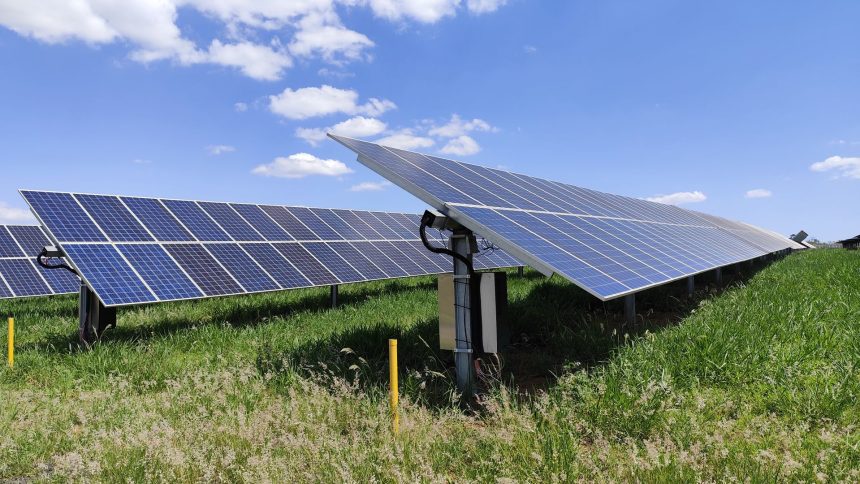
Are you looking for a cheaper, smarter way to power your home? If so, you need to know about Perovskite Solar Cells. Experts now call them the biggest breakthrough in solar energy in decades. Unlike the heavy silicon panels on rooftops today, these new cells are thin, light, and easy to make. As a result, they could bring clean energy to millions of people around the world, including across the USA and other countries.
What are Perovskite Solar Cells?
A perovskite solar cell is a type of solar cell that uses a special crystal structure to absorb sunlight. Most of the time, this material is a mix of organic and inorganic compounds. Because of their unique crystal shape, they are very good at capturing light energy. In addition, they are so thin that manufacturers can print or coat them onto plastic, glass, or even curved surfaces.
This flexibility is a game-changer. Traditional solar panels only work on flat, hard rooftops. However, perovskite technology works almost anywhere, from windows to building walls.
Why Efficiency Matters More Than You Think?
Solar efficiency measures how much sunlight a panel converts into usable electricity. For years, silicon was the top performer. But perovskite technology has improved faster than any other solar material in history.
In less than a decade, perovskites reached efficiency levels that took silicon over 40 years to achieve. Furthermore, when scientists combine perovskite with silicon, they create what are called tandem solar cells. These tandem cells are even more powerful and could soon surpass anything on the market today.
You can read more about tandem cell research at NREL’s Perovskite Solar Research page.
Perovskite Vs. Silicon: a Quick Comparison
| Feature | Silicon panels | Perovskite cells |
| Weight | Heavy & rigid | Light & flexible |
| Manufacturing cost | High | Much lower |
| Where they work | Flat hard surfaces only | Windows, walls, curved surfaces |
| Efficiency growth | Slow and steady | Rapidly increasing |
| Lifespan (current) | 25+ years | Improving (5-15 years+) |
How are Perovskite Solar Cells Made?
The production process is simple compared to silicon. Silicon panels require extreme heat and complex machinery. In contrast, perovskite cells can be made using a liquid solution process. Think of it like printing text on paper – fast, cheap, and easy to scale up.
Because the process uses less energy, the total environmental cost of making these cells is also much lower. This makes them a genuinely greener choice from the start.
What Challenges do Perovskite Cells Still Face?
No technology is perfect. Currently, perovskites have two main challenges:
- Durability: They can be sensitive to moisture and heat. Scientists are actively working to improve how long they last.
- Lead content: Many perovskites contain lead, which raises environmental concerns. Researchers are finding safer alternatives using tin or bismuth.
Despite these hurdles, progress is moving fast. According to the U.S. Department of Energy, labs around the world are close to solving both problems.
How Clean Energy Improves Your Health?
Cleaner energy directly means better health. When we burn less fossil fuel, we release less carbon dioxide and harmful particles into the air. Therefore, air quality improves. Better air quality leads to fewer asthma attacks, fewer cases of heart disease, and a longer life for everyone.
Switching to thin-film solar solutions like perovskites is one of the most effective steps families and communities can take. Learn more from the WHO’s guide on air quality and health.
What Will Homes and Cities Look Like in the Future?
Here’s something exciting: because perovskite cells can be semi-transparent, they can replace standard window glass. Imagine looking out of your window while it silently generates electricity. Skyscrapers could become vertical power plants. This means cities of the future will produce their own clean energy on every surface.
Consequently, urban energy use could drop dramatically, saving money and cutting pollution at the same time.
Featured snippet answer: Perovskite Solar Cells are lightweight, flexible solar cells that convert sunlight to electricity using a special crystal structure. They cost less to produce than silicon panels and can be applied to windows, walls, and curved surfaces, making them a key technology for the future of clean energy.
Final Thoughts: Should You Care About This Technology?
Absolutely yes. Perovskite Solar Cells are not just a lab experiment anymore. They are close to commercial reality. They offer high efficiency, low cost, and endless flexibility. As a result, they are one of the most powerful tools we have in the fight against climate change.
Whether you care about saving money on energy bills, protecting the planet, or improving public health, this technology matters to you. Keep an eye on perovskite research because it will soon reshape how every home and city powers itself.