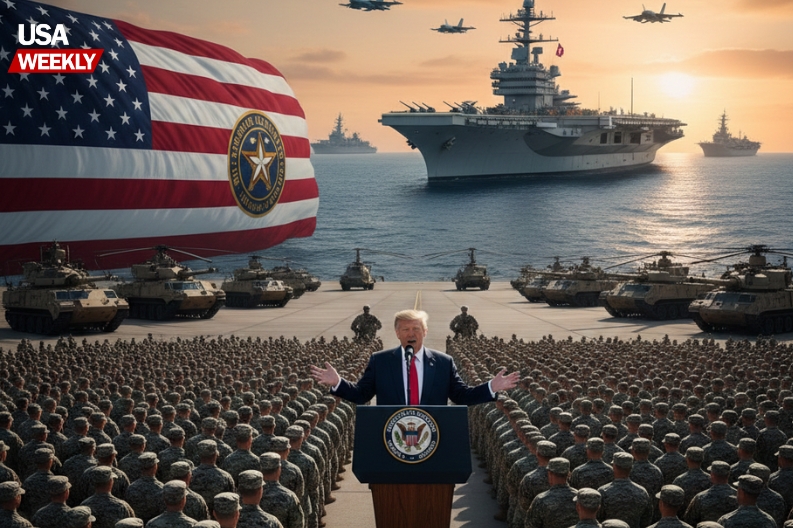
President Donald Trump made bold statements about U.S.-Iran relations during his visit to Fort Bragg Army base in North Carolina on Friday. Speaking before thousands of active-duty soldiers, Trump tells troops ‘fear‘ is a powerful motivator when dealing with difficult international negotiations, particularly regarding Iran’s nuclear program.
Iran Nuclear Talks Face Challenges
The president’s comments came as Washington announced plans to deploy a second aircraft carrier to the Middle East. Trump expressed frustration with Iran’s approach to ongoing nuclear negotiations.
“They’ve been difficult to make a deal,” Trump said. “Sometimes you have to have fear. That’s the only thing that really will get the situation taken care of.”
Furthermore, Trump mentioned the U.S. bombing of Iran’s nuclear facilities that occurred last June. He emphasized that the military deployment ensures America stays prepared if diplomatic efforts fail.
Key Points From Trump’s Fort Bragg Address
| Topic | Details |
| Aircraft Carrier Deployment | USS Gerald R. Ford heading to Middle East |
| Current Military Presence | USS Abraham Lincoln already stationed with 12 ships |
| Diplomatic Status | Oman-facilitated talks showed some progress |
| Next Steps | Future meeting dates not yet announced |
Recent Diplomatic Developments
Oman recently hosted talks between Iranian and American officials. According to Iran’s foreign ministry spokesperson, these discussions allowed Tehran to assess Washington’s commitment to negotiations. Both sides agreed that enough common ground exists to continue diplomatic efforts.
However, the date and location for the next round of talks remain unclear. Meanwhile, Rafael Grossi, head of the UN nuclear watchdog, described reaching an agreement on Iran’s nuclear facilities as “terribly difficult” but still possible.
Venezuelan Operation Recognized
Trump’s visit to Fort Bragg also celebrated special forces troops who participated in the January 3 operation that captured Venezuelan President Nicolas Maduro. This audacious mission brought Maduro to face narco-terrorism and drug trafficking charges in U.S. courts.
Maduro continues to deny any wrongdoing and claims he remains Venezuela’s legitimate leader. Since his capture, Trump has been working with interim successor Delcy Rodriguez. Additionally, the administration seeks greater control over Venezuela’s valuable oil industry.
Political Context of Military Visit
Fort Bragg houses approximately 50,000 active-duty soldiers. Moreover, the base sits in North Carolina, a politically competitive state. This location choice carries significant political weight.
North Carolina will host closely contested races for both Senate and House seats in November’s congressional elections. The state also represents a major prize in the 2028 presidential race.
Breaking Presidential Norms
During his address, Trump departed from traditional presidential behavior by delivering overtly political remarks to military personnel. He criticized his political opponents and warned that Democratic control of Congress would weaken the military.
This approach breaks with longstanding norms about keeping military events separate from partisan politics. Presidents typically avoid such political speeches when addressing active-duty troops.
Trump’s Call for Regime Change
Earlier at the White House, Trump made his strongest statement yet about Iran’s government. When asked about regime change, he responded that it “would be the best thing that could happen.”
Though Trump didn’t specify who should lead Iran after Supreme Leader Ayatollah Ali Khamenei, he stated “there are people” capable of doing so. Previously, Trump had avoided such direct calls for government change in Iran, citing concerns about potential chaos.
Military Pressure Strategy
The USS Gerald R. Ford, the world’s largest warship, will soon depart for the Middle East. This carrier recently operated in the Caribbean following the Venezuela operation.
“In case we don’t make a deal, we’ll need it,” Trump explained about the carrier deployment. The Abraham Lincoln carrier strike group already patrols Middle Eastern waters alongside eleven other American vessels.
Public Opinion Challenges
Trump’s approval ratings have declined since his January 2025 inauguration. Voters express primary concerns about high living costs and economic pressures. In response, administration aides announced that Trump tells troops ‘fear’ is powerful motivator as part of a broader strategy to visit competitive states weekly and engage directly with voters.
International Reactions
The exiled son of Iran’s former shah, overthrown in the 1979 revolution, renewed calls for international intervention. These appeals followed recent violent crackdowns on protesters by Tehran’s government.
Iran’s leadership has not yet officially responded to Trump’s regime change comments. However, previous statements from Iranian officials suggest they view such rhetoric as attempts to interfere in their sovereignty.
Key Takeaway: President Trump’s Fort Bragg visit combined military recognition with diplomatic messaging, emphasizing that fear remains a crucial tool in international negotiations while simultaneously deploying significant military assets to the Middle East.