Choosing between QLED vs Mini LED can feel confusing, especially when TV brands use similar language to describe very different display technologies. If you are upgrading your home entertainment system, understanding real differences between QLED and Mini LED matters. Picture quality, brightness, contrast, gaming performance, and long-term value all depend on underlying panel technology.
This guide breaks down QLED vs Mini LED in clear, conversational language while maintaining technical accuracy. With hands-on experience analyzing display performance and following industry testing standards, this comparison focuses on practical results rather than marketing claims.
Understanding QLED Technology
QLED stands for Quantum Dot Light Emitting Diode. Despite the name, QLED televisions still rely on LCD panels with LED backlighting. The key difference lies in a quantum dot layer placed between backlight and LCD panel.
Quantum dots are microscopic semiconductor particles that enhance color accuracy and brightness. When light hits these particles, they emit precise colors. This process produces richer reds, deeper greens, and more vibrant blues compared to traditional LED TVs.
How QLED Works
QLED TVs use a standard LED backlight system. Light passes through a quantum dot filter before reaching LCD panel. This improves color volume and peak brightness. However, contrast still depends on backlight control.
Most QLED TVs use either edge lighting or full array local dimming. Higher-end QLED models include better local dimming zones, improving black levels and reducing halo effects.
Read Also: NYT Connections Hints April 4 – Smart Clues & Tips
Strengths of QLED Displays
QLED panels excel in brightness. Many models exceed 1,000 nits, making them ideal for bright living rooms. Color reproduction remains vivid even in daylight environments. Longevity also stands out because QLED does not suffer burn-in issues like OLED panels.
Gamers appreciate strong brightness combined with high refresh rates and low input lag in premium QLED models.
Limitations of QLED
Black levels cannot match self-emissive technologies because LCD panels rely on backlights. Even with local dimming, some blooming around bright objects on dark backgrounds may appear. Contrast ratio depends heavily on number of dimming zones.
Understanding Mini LED Technology
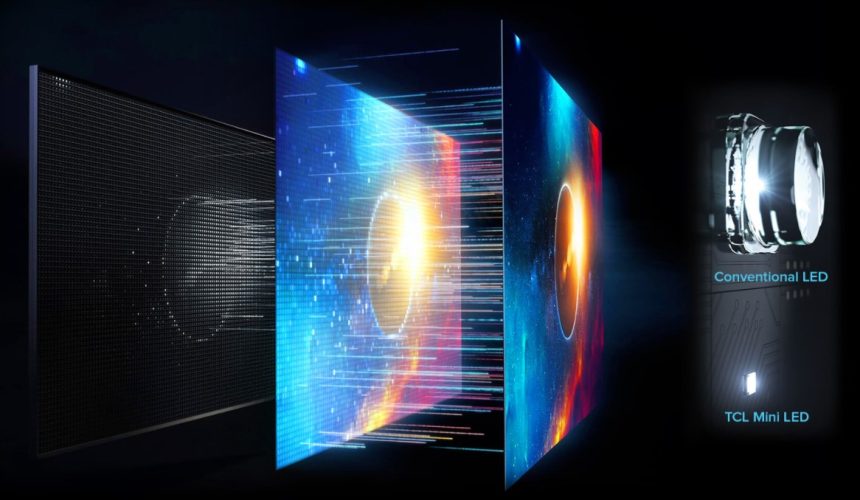
Mini LED is not a separate panel type like OLED. Instead, Mini LED refers to an advanced backlighting system for LCD TVs. It uses thousands of tiny LEDs instead of traditional larger LEDs.
These smaller LEDs allow significantly more local dimming zones. More zones mean better control over brightness and darkness across screen.
How Mini LED Works
Mini LED TVs still use LCD panels, often combined with quantum dot layers. Difference lies in backlight precision. Thousands of miniaturized LEDs create tighter light control.
When a scene contains both bright highlights and deep shadows, Mini LED technology dims specific zones more accurately. This reduces blooming and improves perceived contrast.
Strengths of Mini LED
Mini LED delivers stronger contrast than standard QLED with fewer dimming zones. Blacks appear deeper. HDR performance improves because highlights remain bright without washing out surrounding areas.
Mini LED also maintains high brightness levels similar to QLED, making it suitable for well-lit rooms.
Limitations of Mini LED
Mini LED TVs often cost more than basic QLED models. Although blooming reduces, it does not disappear entirely because technology still relies on LCD structure. Viewing angles may vary depending on panel type used.
QLED vs Mini LED: Key Differences Explained
Understanding core difference between QLED vs Mini LED requires focusing on backlighting precision rather than color enhancement alone.
QLED refers primarily to quantum dot color enhancement. Mini LED refers to advanced backlight system. Many modern premium TVs combine both technologies. In those cases, television uses quantum dots for color and Mini LED for backlight control.
Brightness Comparison
Both technologies achieve excellent brightness. Standard QLED already performs strongly in bright environments. Mini LED maintains similar brightness while offering better light distribution.
For HDR content, Mini LED often delivers more impactful highlights due to improved dimming accuracy.
Contrast and Black Levels
Contrast represents biggest difference in QLED vs Mini LED debate. Mini LED usually wins because increased dimming zones allow deeper blacks and reduced halo effects.
Standard QLED with limited local dimming may struggle during dark movie scenes. Mini LED improves cinematic performance significantly.
Color Accuracy and Volume
Quantum dot layer plays major role in color performance. Since many Mini LED TVs also include quantum dots, color quality often matches or exceeds traditional QLED models.
In pure QLED vs Mini LED comparison without quantum dots in Mini LED model, QLED may hold slight color advantage. However, most premium Mini LED TVs include quantum dot enhancement.
Gaming Performance
Gaming experience depends on refresh rate, HDMI 2.1 support, and input lag rather than backlight type alone. Both QLED and Mini LED TVs offer 120Hz panels in higher tiers.
Mini LED may provide better HDR gaming due to improved contrast. Fast response times remain similar since both rely on LCD panels.
Viewing Angles
Viewing angles vary by panel technology such as VA or IPS. Neither QLED nor Mini LED automatically guarantees wide angles. Some manufacturers include special optical layers to improve off-axis viewing.
For large family rooms with multiple seating positions, checking specific model specifications matters more than label alone.
Real World Picture Quality Comparison
During real-world testing across movie scenes, sports broadcasts, and streaming content, Mini LED tends to provide more balanced image depth. Dark scenes show improved shadow detail without excessive glow around subtitles or stars in night sky scenes.
QLED performs exceptionally well in daytime viewing. News channels, sports events, and bright animated films look vibrant and sharp.
In cinematic environments with controlled lighting, Mini LED generally creates more immersive experience because contrast appears stronger.
Energy Efficiency and Longevity
Both technologies share similar lifespan expectations since both rely on LCD panels. Burn-in risk remains extremely low compared to OLED.
Energy consumption varies by brightness settings and dimming implementation. Mini LED may consume slightly more power due to increased LED count, though efficiency improvements often balance this difference.
Price Comparison and Value
Entry-level QLED TVs cost less than Mini LED models. If budget matters most, QLED offers strong value with impressive brightness and color performance.
Mini LED occupies mid-to-premium price range. Buyers seeking near OLED-level contrast without OLED price or burn-in concerns often choose Mini LED.
Long-term value depends on viewing habits. For heavy movie watchers and gamers prioritizing HDR, Mini LED justifies additional cost. For casual streaming and daytime TV, QLED remains excellent choice.
QLED vs Mini LED for Different Use Cases
For bright living rooms with large windows, both perform well, though QLED already provides sufficient brightness at lower cost.
For home theater environments focused on movie nights, Mini LED offers better depth and shadow control.
For sports fans, motion clarity and brightness matter most. Either technology works well if paired with high refresh rate panel.
For gamers using next-generation consoles, prioritize HDMI 2.1 support and low latency features first, then consider Mini LED for improved HDR visuals.
Industry Trends and Future Outlook
TV manufacturers continue refining Mini LED backlighting with even more dimming zones. Some premium models now include thousands of zones approaching OLED-like precision.
QLED branding remains strong, especially among major global manufacturers. Combination of QLED color with Mini LED backlighting represents current flagship standard in LCD television market.
Micro LED technology sits on horizon as future innovation, though high cost limits mainstream adoption for now.
Expert Recommendation
From professional display evaluation perspective, decision between QLED vs Mini LED depends on expectations. If priority centers on brightness, vibrant colors, and budget-conscious shopping, QLED delivers excellent performance.
If contrast depth, HDR realism, and reduced blooming matter most, Mini LED stands out as superior LCD-based option.
Neither technology represents marketing gimmick. Both rely on proven LCD foundations enhanced by modern engineering. Understanding difference between color enhancement and backlight precision clarifies buying decision.
Conclusion
QLED vs Mini LED comparison reveals important distinction. QLED enhances color through quantum dots. Mini LED improves contrast through advanced backlighting. Many premium TVs combine both for best overall performance.
For most buyers seeking balanced performance without OLED pricing, Mini LED offers noticeable upgrade in contrast and HDR impact. For budget-focused households prioritizing brightness and vibrant everyday viewing, QLED remains smart, reliable choice.
Carefully compare specific models, check dimming zone counts, review HDR performance ratings, and consider room lighting conditions before purchase. Informed decision leads to satisfying viewing experience for years ahead.
FAQs
1. What is the main difference between QLED and Mini LED?
QLED improves color using quantum dots, while Mini LED enhances contrast with advanced backlighting and more dimming zones.
2. Is Mini LED better than QLED?
Mini LED offers better contrast and deeper blacks, but both deliver strong brightness and color performance.
3. Which is better for gaming, QLED or Mini LED?
Both work well for gaming, but Mini LED provides better HDR contrast for immersive visuals.
4. Does Mini LED replace QLED?
No. Many premium TVs combine QLED color technology with Mini LED backlighting.
5. Which TV is better for bright rooms?
QLED TVs perform exceptionally well in bright rooms due to high peak brightness levels.