
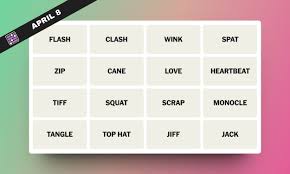
NYT Connections has become a daily ritual for puzzle enthusiasts around the world. This word association game challenges players to group sixteen words into four meaningful categories. Each puzzle is designed to test vocabulary, pattern recognition, and creative thinking while remaining accessible enough for casual players.
The game’s appeal lies in its combination of challenge and fun, turning everyday words into unexpected patterns that spark moments of discovery and satisfaction.
The puzzle for April 8 offered a clever mix of categories that pushed players to think critically. Some found it intuitive, while others needed to explore the word relationships more carefully before identifying the correct groupings. What makes puzzles like this exciting is how they engage different types of reasoning, from recognizing sound patterns to tapping into cultural and biblical references.
How the NYT Connections Puzzle Works
Connections presents sixteen words and asks players to identify four groups of four words each. Each group shares a theme that is not immediately obvious. The game allows a limited number of attempts per day, which encourages careful consideration before making selections.
There isn’t one universal strategy, but players benefit from observing patterns, thinking laterally, and eliminating words that don’t fit.
The puzzle often categorizes groups by difficulty, with easier categories being more immediately recognizable and harder categories requiring deeper thought or knowledge. Understanding these subtle hints can make solving the puzzle faster and more satisfying.
Read Also: Best Router for Fiber Internet – Speed, Coverage & Reliability
April 8 Puzzle: Category Hints
The April 8 puzzle featured a diverse set of themes that made it both challenging and enjoyable. The first category focused on actions associated with a sharp sensation or movement. These words often evoke physical imagery, requiring players to think about verbs or actions that share a similar meaning.
The second category involved common communication terms, reminiscent of jargon from radio, aviation, or military contexts. Recognizing familiar terms in unusual combinations tested players’ attention to detail and cultural knowledge.
A third category leaned on biblical knowledge, particularly the titles of Old Testament books. This required not only familiarity with scripture but also the ability to see connections between words in a thematic context.
The final category was a linguistic twist, challenging players to identify words that share a pronunciation pattern. In this case, the words all included a “sh” sound even though the letters “sh” did not appear in them. Phonetic puzzles like this test players’ auditory recognition skills rather than their vocabulary alone.
Solving the April 8 Puzzle
Solving the puzzle required careful observation and reasoning. The first category’s focus on sharp or piercing actions encouraged players to consider verbs that suggest poking, stabbing, or jabbing. Identifying the shared characteristic among these words helped form the first correct group.
The communication-themed category required players to think about terminology used in transmitting messages. Words that might appear in radio chatter, walkie-talkies, or aviation communication fit into this grouping. Recognizing context and usage was key to solving this part of the puzzle.
The biblical category drew on knowledge of Old Testament books, requiring players to match words based on historical or scriptural significance. For those familiar with the texts, this grouping came together quickly, but for others, it involved a bit of reasoning and recall.
The phonetic category was tricky. Players had to identify words that contained a particular sound without the corresponding letters. This required a different way of thinking, focusing on how words are pronounced rather than how they are written.
Why NYT Connections Is So Popular
The popularity of NYT Connections is rooted in its ability to balance challenge with accessibility. Players experience satisfaction from spotting connections quickly, while still being challenged to think creatively. The hints and categories allow newer players to gradually improve their pattern recognition skills, making the game suitable for both beginners and experienced solvers.
Community engagement is another factor. Many players discuss puzzles online, sharing strategies, tips, and insights. This social aspect turns a simple word game into a communal experience where people celebrate discoveries and share the thrill of tricky categories. The combination of mental stimulation and social interaction keeps players returning daily.
Improving Your Connections Skills
Regularly playing Connections improves mental agility. Over time, players learn to anticipate the types of patterns the game employs, including semantic relationships, phonetic quirks, and cultural references. This experience builds a mental toolbox that helps solve future puzzles more efficiently.
A common strategy is to tackle the easiest category first, often the one with the most obvious shared characteristic. Solving this category early reduces the number of remaining words and frees cognitive resources for the more challenging groups. From there, players can progress to moderately difficult categories and finally address the most complex or abstract groupings.
Keeping the Challenge Engaging
One of the reasons Connections remains engaging is its unpredictability. Some days feature straightforward patterns, while other days include clever twists or phonetic tricks that challenge even veteran players. This variation keeps the game fresh and encourages players to approach each puzzle with curiosity.
For those seeking an extra challenge, there are fan-created puzzles that remix or reframe categories. These alternative puzzles build on the official game’s concepts, offering additional practice and fun while encouraging creative thinking.
The Mental Benefits of Playing Connections
Beyond entertainment, NYT Connections provides cognitive benefits. The game improves vocabulary, strengthens pattern recognition, and enhances problem-solving skills. It also encourages players to think both logically and creatively, combining analytical and imaginative thinking.
Playing regularly keeps the mind sharp and builds mental flexibility, which can benefit other areas of life, from work tasks to everyday problem solving.
Conclusion
The NYT Connections hints for April 8 highlight the game’s clever combination of vocabulary, pattern recognition, and cultural knowledge. By providing hints, players can approach the puzzle with confidence while still enjoying the challenge of discovery. The game’s mix of semantic, phonetic, and cultural categories makes it engaging for a wide audience.
Regular play strengthens critical thinking, vocabulary, and problem-solving skills, making NYT Connections a stimulating and enjoyable daily challenge. Whether approached casually or competitively, puzzles like the April 8 edition continue to sharpen minds and bring players together in the shared experience of finding connections in unexpected places.
FAQs
What is NYT Connections?
NYT Connections is a word association game where players group 16 words into four related categories.
How do I solve NYT Connections April 8 puzzle?
Identify the common themes among words and group them into four categories based on meaning, phonetics, or context.
What types of categories appear in Connections puzzles?
Categories include actions, communication terms, biblical references, phonetic patterns, and other creative groupings.
Are there hints available for NYT Connections?
Yes, hints help recognize word patterns and thematic connections to make solving the puzzle easier.
How can I improve at NYT Connections?
Practice daily, focus on pattern recognition, and pay attention to semantic, phonetic, and cultural clues in words.