
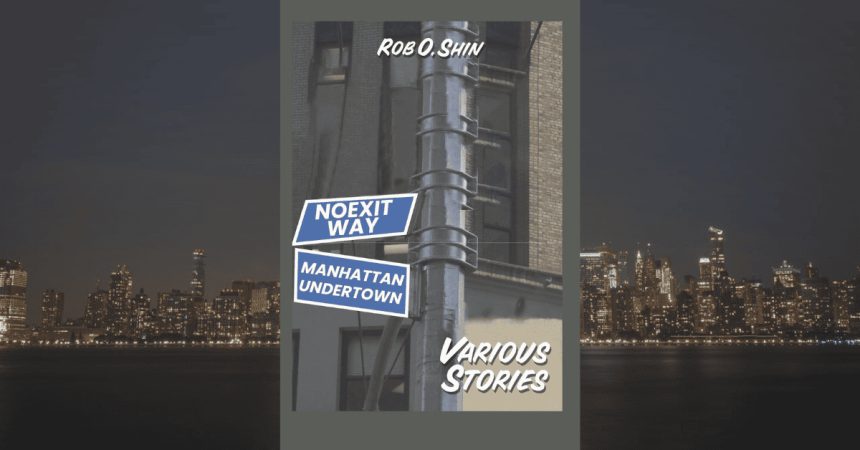
In the vast library of crime fiction, few novels manage to fuse grit, romance, and philosophy the way No Exit Way does. Crafted with precision and poetic depth, the story draws readers into a labyrinth where crime investigations bleed into urban myths, and love becomes both salvation and destruction. At the heart of this layered narrative are unforgettable characters. Detective Bobby Sullen, Rowman Lamb, and the enigmatic Julia, “Queen of Under town.”
Recently, the author sat down with a journalist to reflect on the inspirations and meanings woven into the pages. What emerges is not just a crime novel but a reflection on society’s shadows, its forgotten people, and the enduring contradictions of human nature.
Inspiration from Underground Legends
When asked about the origins of the story, the author recalls a chance train ride into Manhattan. A friend who had worked at the MTA for decades told stories of hidden lives beneath the city’s infrastructure. That spark ignited the creation of Under Town, a subterranean society where cast-offs, rebels, and survivors form a secret community.
“It wasn’t about creating a myth,” the author explains. “I heard a real story about people living in underground communications, which I presented as a legend, maybe not very beautiful, but not without romance.”
From this, No Exit Way was born, a tale that straddles the real and the mythical, echoing urban legends yet grounded in the lived textures of New York’s geography and culture.
Bobby Sullen: A Detective with a Human Core
Central to the novel is Detective Bobby Sullen, who is investigating several mysterious deaths on a New York subway.
And who is both flawed and deeply human. Unlike the usual hardboiled archetype, Sullen isn’t drawn from extensive research on law enforcement. Instead, he embodies the author’s own worldview.
“Bobby is rather a person close to me in his perception of life,” the author shares. This connection makes Sullen relatable, a man caught between duty and desire, reason and vulnerability.
His attachment to Julia, the Queen of Under town, becomes more than professional curiosity. It evolves into a psychological dependency, exploring timeless themes of manipulation, addiction, and the peril of falling under someone else’s spell.
Julia: Villain, Heroine, or Both?
Julia is one of the most complex characters in No Exit Way—a criminal mastermind, leader, and seductress, yet also a woman marked by tragedy. The author views her as both a villain and a tragic heroine. “A girl whose mother dies in childbirth is tragic from the start,” he notes. “If we consider her passionate love to be a tragedy, then she is also a tragic heroine. I just made her up like that, and I was in love with her, but not for long.
This duality drives the tension of the novel. Is Julia a monster shaped by her environment or a heroine destroyed by circumstance? Readers are left to decide, and therein lies her power.
Themes of Addiction, Family, and Fate
Addiction permeates the book: alcohol, drugs, love, grief, and even the lure of power.
“Addiction, as a disease, is terrible,” the author says. “But there are addictions that people do not want to get rid of … As for love, this addiction can be so strong but pleasant that people are ready to give their lives.”
Family legacies also loom large. Rowman’s wealthy parents, Julia’s criminal father known as “the Jeweler,” and Sullen’s own personal losses all serve as backdrops for choices that echo across generations. The novel suggests that inheritance, whether in the form of wealth, trauma, or
grief, shapes destinies in ways that character’s struggle to escape.
The recurring symbol, the “No Exit” sign, adds yet another layer of complexity. The author describes it as a metaphor for hopelessness.
Crime, Poetry, and Philosophy
What sets No Exit Way apart from conventional crime thrillers is its refusal to stay within the lines of genre. Instead, it interlaces gritty realism with philosophical and even poetic musings. “I never try to follow any canons in my writing,” the author admits. “First of all, I get enormous pleasure from the process, and I hope that state will be conveyed to readers.”
But there is one exception, I often use this technique. I call it the “spy effect,” when, to make the disinformation more reliable, they add a few real facts to it.
The book also critiques modern society’s voyeurism. In its closing moments, camera flashes immortalize tragedy, turning death into spectacle. The author confesses fear at how people today film horrors on their phones rather than intervening. It’s a striking indictment of a world where empathy is sidelined by spectacle.
From Page to Screen?
With its rich characters and cinematic flair, No Exit Way begs for adaptation. Asked about casting, the author envisions actors like Jean Gabin and Angelina Jolie stepping into the roles of Bobby and Julia. It’s an answer that underscores how timeless and archetypal these figures are, modern yet mythic, rooted in noir but alive in today’s dilemmas.
A Story That Lingers
Ultimately, No Exit Way is not just about crime, nor just about love. It’s about the thin line between law and lawlessness, the fragile human core behind every mask, and the subterranean truths we often ignore. New York’s cityscape becomes both stage and symbol, a place where glamour and decay coexist, and where even in darkness, poetry thrives.
The author hopes readers will feel what he felt while writing: joy in creation, fascination with contradictions, and a recognition that even in the underground, humanity persists.
With No Exit Way, readers are invited not merely to solve a mystery but to confront the mysteries of human nature itself.