
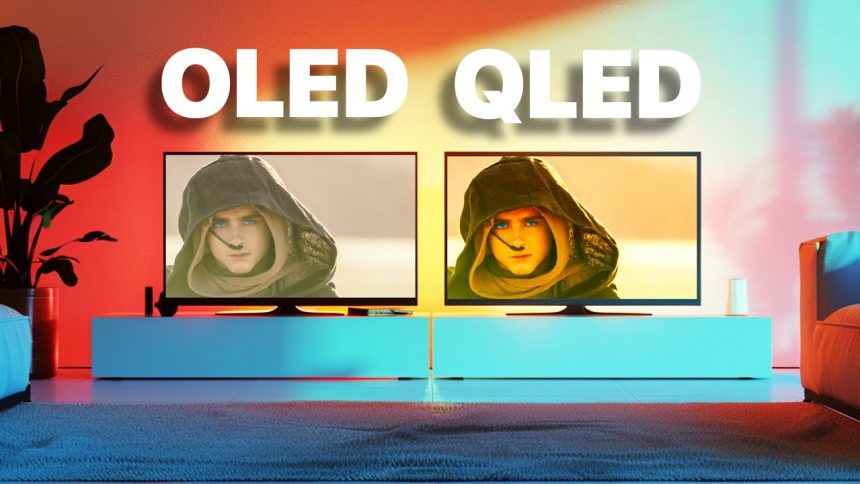
When it comes to buying a new TV, two technologies dominate the conversation: OLED and QLED. These acronyms might sound like technical jargon, but understanding the differences can drastically improve your viewing experience.
People often ask, “Is OLED better than QLED?” The answer depends on your priorities—picture quality, durability, brightness, or budget. In this article, we’ll dive deep into the comparison to help you make an informed choice.
Understanding OLED and QLED Technology
Before deciding whether OLED is better than QLED, it’s essential to understand how each technology works. OLED stands for Organic Light Emitting Diodes. Each pixel emits its own light, allowing precise control over brightness and contrast. This means true blacks, infinite contrast ratios, and vibrant colors.
On the other hand, QLED stands for Quantum Dot LED. It uses a backlight with a layer of quantum dots to enhance brightness and color. Unlike OLED, QLED cannot turn off individual pixels, which affects black levels and contrast. However, QLED excels in peak brightness, making it ideal for bright rooms.
Picture Quality: The Main Factor in Choosing
Picture quality is the top concern for most TV buyers. When comparing OLED vs QLED, OLED typically has the edge due to its ability to produce true blacks. Each OLED pixel can turn off completely, creating stunning contrast and incredible detail in dark scenes. If you watch movies with lots of shadows or cinematic visuals, OLED delivers a more immersive experience.
QLED TVs, however, shine in bright environments. The backlit panel combined with quantum dots allows for intense brightness, which helps in well-lit rooms or for daytime viewing. Colors are vivid and sharp, but black levels cannot match OLED. Therefore, if brightness is a priority, QLED might be a better fit.
Read Also: SMITHING Stone 5 Bell Bearing: Location, Use, Upgrade Guide
Color Accuracy and HDR Performance
High Dynamic Range (HDR) content is becoming increasingly popular, and both OLED and QLED support HDR formats. OLED panels offer excellent color accuracy with natural and lifelike tones. Watching content with deep shadows, subtle highlights, or complex gradients appears more realistic on OLED.
QLED TVs also deliver excellent HDR performance but rely heavily on backlight technology to enhance colors. Brightness peaks are higher, which can make HDR highlights pop, but some subtle details in darker areas may be lost compared to OLED. For people asking whether OLED is better than QLED for cinematic viewing, OLED usually takes the lead due to superior color precision and contrast control.
Viewing Angles and Screen Uniformity
Viewing angles are another factor that can sway your decision. OLED screens provide consistent color and brightness even when viewed from the side. This makes OLED ideal for wide seating arrangements or large living rooms. On the contrary, QLED TVs can experience color shifting or reduced brightness at wider angles, limiting the optimal viewing zone.
Screen uniformity is also better on OLED because each pixel functions independently. QLED panels, with their backlight system, may exhibit slight blooming or halo effects around bright objects on dark backgrounds. For those who prioritize picture consistency, this is another point where OLED vs QLED favors OLED.
Durability and Burn-In Concerns
One of the downsides of OLED technology is the risk of burn-in. This occurs when static images remain on the screen for a prolonged period, leaving a permanent mark. Although modern OLEDs have improved with features like pixel shifting to reduce burn-in risk, it remains a consideration for heavy TV gamers or users who watch channels with static logos.
QLED TVs, using LED backlighting, do not face burn-in issues. They tend to last longer without worrying about image retention, making QLED a more durable choice for certain use cases. So, when asking if OLED is better than QLED, durability and burn-in resistance might make QLED more appealing to some users.
Design and Aesthetic Appeal
OLED TVs are remarkably thin and flexible since they don’t require a bulky backlight. This allows for sleek, modern designs that can complement any room decor. Some OLED models even allow wall-mounting flush with the wall, creating a stunning visual effect.
QLED TVs are generally slightly thicker due to the backlight system but still feature slim and elegant designs. While both technologies look great, OLED tends to have a futuristic edge that attracts design-conscious buyers.
Price and Value for Money
When deciding between OLED and QLED, price often becomes the deciding factor. OLED TVs are usually more expensive because of their complex manufacturing process. Larger OLED models can cost significantly more, which may be prohibitive for some buyers.
QLED TVs are typically more affordable, especially for larger screen sizes. They offer excellent brightness, color performance, and longevity at a lower cost. For families or casual viewers who prioritize size and value, QLED provides a compelling alternative.
Gaming Performance
Gaming enthusiasts often wonder which display is better for high-speed gameplay. OLED TVs have faster response times and virtually no motion blur, making them ideal for gaming. The deep blacks and contrast also enhance the visual experience of games with dark environments.
QLED TVs can compete with high brightness and vibrant visuals, but response times are slightly slower, and dark scenes may lose detail. However, some QLED models offer high refresh rates and low input lag, making them suitable for competitive gaming. The choice between OLED vs QLED for gaming depends on whether you value contrast and immersion or brightness and price.
Energy Consumption and Environmental Impact
Energy efficiency is another consideration. OLED TVs consume less power when displaying darker content since each pixel can turn off. However, bright scenes on OLED may use more energy than QLED. QLED TVs maintain consistent power consumption due to the backlight but can be slightly less efficient overall.
From an environmental perspective, both technologies have a similar manufacturing footprint, but OLED’s energy efficiency in typical dark-mode usage can give it a slight advantage.
Conclusion
So, is OLED better than QLED? The answer depends on your priorities. If you want superior contrast, true blacks, wide viewing angles, and cinematic quality, OLED is the clear winner. If you prefer brighter screens, durability, longer lifespan, or a lower price point, QLED may suit your needs better.
Ultimately, both technologies offer remarkable viewing experiences, and the choice comes down to how you watch TV and what matters most to you. Understanding the strengths and weaknesses of OLED vs QLED ensures you make a confident purchase that elevates your entertainment setup.
FAQs
What is the main difference between OLED and QLED?
OLED uses self-lighting pixels for true blacks, while QLED uses a backlight with quantum dots for higher brightness.
Is OLED better than QLED for movies?
Yes, OLED offers better contrast and deep blacks, making it ideal for cinematic viewing.
Which TV is better for bright rooms?
QLED performs better in bright environments due to higher peak brightness.
Do OLED TVs have burn-in issues?
OLED can experience burn-in with static images, but modern TVs include features to reduce this risk.
Which is better for gaming, OLED or QLED?
OLED provides faster response times and better contrast, while QLED offers bright visuals and durability.