By Scott R., Senior Health Correspondent
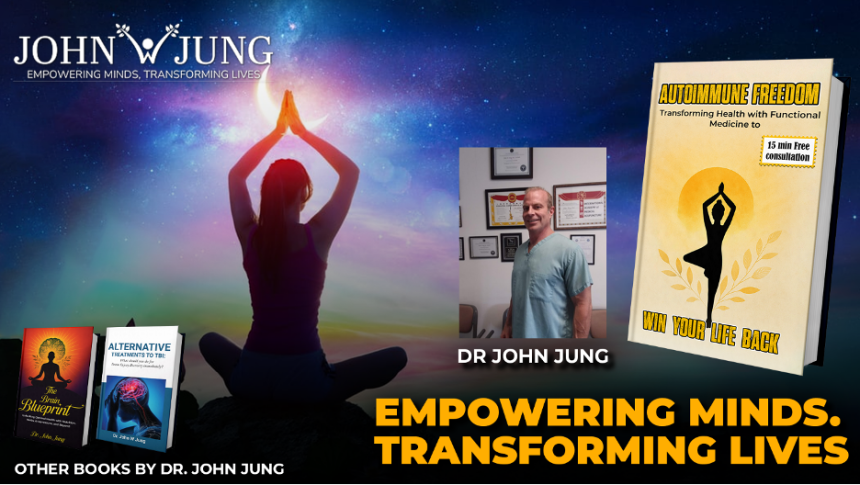
Dr. John W. Jung has spent years helping people who feel stuck in their own bodies. Most of them are women. Many have been told their pain is “in their head.” His new book, Autoimmune Freedom, is his way of saying—it’s not.
“I don’t want my readers just to be informed,” he says. “I want them to be transformed.”
Dr. Jung sees autoimmune problems every day. “Ninety percent of my patients are female,” he says. “And a lot of them have autoimmune issues. It’s showing up in men and kids too, but women are the main group.”
The problem hits close to home. Rheumatoid arthritis runs in his family. Then came COVID, which, he explains, triggered the same kind of inflammation seen in autoimmune disorders. “That’s when I realized how everything connects—our hormones, our food, and our stress.”
Here’s the thing—Dr. Jung doesn’t believe your body turns against you. “It’s doing exactly what it was designed to do,” he says. “You just have to change the inputs.”
In simple terms, autoimmune conditions happen when something outside gets in, and your body overreacts. “It’s not betrayal. It’s confusion,” he adds. “And that’s where epigenetics comes in—how your environment shapes your health.”
He’s not shy about calling out modern medicine. “Drugs like Enbrel or Humira don’t fix the problem,” he says. “They just slow it down. They don’t ask why the body went wrong in the first place.”
That’s why functional medicine matters to him. “We want to know what triggered it,” he explains. “If you fix that, your body can start healing naturally.”
Still, he’s not anti-medicine. “There’s a time for both,” he says. “Some people need medication, and that’s okay. But you still have to look at food, sleep, stress—all of it.”
Dr. Jung keeps it simple: avoid inflammation. “It’s the common factor in everything—arthritis, Alzheimer’s, aging, even cancer,” he says.
He recommends foods rich in omega fats and herbs like curcumin and boswellia. “They calm the body in ways medicine can’t,” he says. “And if you find out which foods you’re sensitive to, you’ll feel a real difference.”
He also warns against fast food and heavy carbs. “Vegetarian diets sound good, but most of them end up being all carbs,” he says. “Look at nature. The top predators don’t have autoimmune problems.”
Ask Dr. Jung about stress, and he’ll go straight to the gut. “Your gut is your second brain,” he says. “They’re connected by the vagus nerve. What you eat changes how you think, and what you think changes how your body reacts.”
He tells patients to practice good breathing, drink clean water, and keep good company. “Bad air and bad friends can make you sick just like bad food,” he says, half-joking but serious.
Simple Steps That Actually Help
Dr. Jung doesn’t make healing sound complicated.
“If you can’t do everything, just start somewhere,” he says.
Here are a few of his go-to suggestions:
- Eat fresh, simple food.
- Get some sunlight and rest.
- Try “box breathing”: breathe in for four seconds, hold for four, exhale for four, hold again for four.
- Write down your worries before bed so your brain can rest.
- Use sound or guided sleep videos instead of staring at your phone.
“It didn’t take one day for your body to get this way,” he says. “So give it some time to get better.”
Over the years, he’s seen major turnarounds—people with thyroid issues, Crohn’s, diabetes, even multiple sclerosis. “When you fix the cause instead of masking symptoms, the body starts to do what it was meant to do,” he says.
He also works with medical doctors when needed. “We’re not enemies,” he says. “Even the drug commercials say, ‘Use this with diet and exercise.’ But most people skip the diet and exercise part.”
Dr. Jung’s next book, The Brain Blueprint, will focus on mental health and neurodegenerative diseases. “One out of three people will die from a brain problem,” he says. “We have to talk about dementia, Alzheimer’s, Parkinson’s—all of it.”
He’s already blending topics like nutrition, nootropics, and acupressure into that work. “No one’s made a book like this yet,” he says.
Final Words
Before we end the interview, Dr. Jung leans back and smiles.
“I’m the only doctor offering a free 15-minute consultation to readers,” he says. “If they get stuck or confused, I’ll help them out. No charge.”
And when asked what he hopes readers will remember, he doesn’t hesitate:
“You’re not broken,” he says quietly. “You’re just waiting to heal.”