Your television is one of the most important pieces of technology in your home. Whether you are enjoying a favorite series, watching sports, or streaming movies with friends and family, you want your TV to stay protected and working for years. Modern televisions are expensive and packed with delicate electronics. A sudden power surge from lightning, faulty wiring, or electrical spikes can destroy your TV instantly.
That is why choosing the best surge protector for TV matters more than just picking a cheap power strip. In this article you will learn how surge protectors protect your TV, what key features to look for, and how to choose the right one that gives you peace of mind and reliable protection.
Modern TVs are far more advanced than older models. Smart capabilities, high-definition panels, integrated internet connectivity, and internal processors make your TV more vulnerable to electrical disturbances. A surge protector does more than extend outlets. It shields your TV from unchecked voltage spikes that can permanently damage your investment. Investing in the right surge protector now can save you from costly repairs or full replacements later.
In this guide we cover what makes the best surge protector for TV, the features that matter, and how to make a confident decision when choosing protection for your home entertainment center.
What Is a Surge Protector and Why Your TV Needs It
A surge protector is a device that sits between your TV and the wall outlet to guard against sudden increases in electrical voltage. These spikes can come from storms, power grid fluctuations, faulty wiring, or even large appliances that cycle on and off. Without protection, your TV’s internal circuits can be overwhelmed within microseconds.
A surge protector uses special components such as Metal Oxide Varistors (MOVs) to absorb and redirect excess energy. The MOVs act like shock absorbers for electricity. When voltage rises beyond safe levels, the surge protector diverts it away from your TV and safely grounds it. This prevents the excess energy from reaching sensitive components in your television.
You might already think your home’s wiring protects your devices. Many homes have whole-house surge protection installed at the breaker panel, but this only stops very large surges. Smaller but still harmful spikes can travel through your wiring and reach your TV. A point-of-use surge protector at the outlet your TV uses adds an extra layer of defense right where it matters most.
Without surge protection, your TV is exposed every time there is an electrical disturbance. These disturbances are invisible and unpredictable. That means damage could be happening quietly over time, shortening your TV’s lifespan without any warning signs. A quality surge protector protects your investment and gives you peace of mind.
Read Also: BOBA Tea Game Google: Play Online Bubble Tea Challenge
Key Features to Look for in a TV Surge Protector
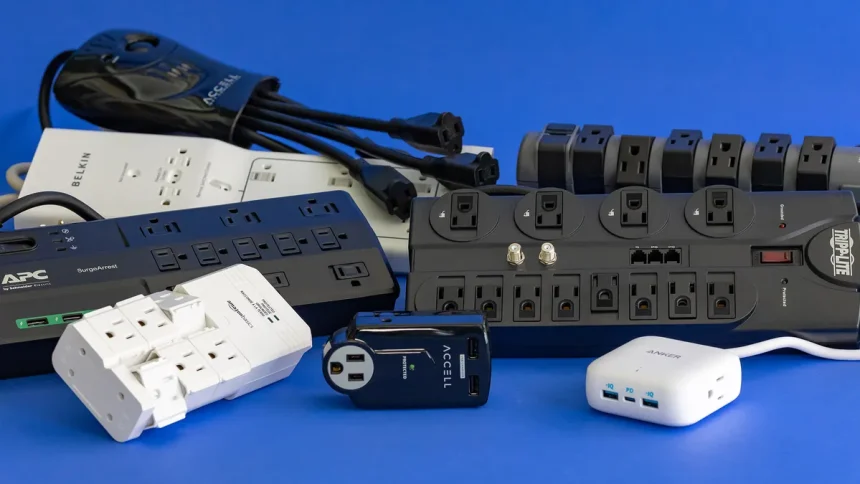
Not all surge protectors are created equal. Some are little more than extension cords with minimal protection. When shopping for the best surge protector for your TV, pay attention to these important features.
High Joule Rating for Maximum Protection
The joule rating tells you how much energy the surge protector can absorb before it fails. Think of it as the total capacity to withstand hits from power surges. The higher the joule rating, the better the protection. For a TV setup, aim for a surge protector with at least 2,000 joules of protection or more if you have additional devices connected.
Lower-rated protectors may work for small spikes, but they can be overwhelmed quickly during a larger surge. A high joule rating ensures more robust protection and longer life for the surge protector itself.
Clamping Voltage and Reaction Speed
Clamping voltage is the point at which the surge protector redirects excess voltage away from your devices. Lower clamping voltage is better because it means the protector reacts sooner, keeping harmful voltage from reaching your TV. Ideal clamping voltage ratings are around 400 volts or lower.
Response time is equally important. Fast response times ensure that the surge protector reacts in microseconds to voltage spikes. The quicker the reaction, the less chance your TV’s electronics are exposed to harmful energy.
Enough Outlets and Smart Spacing
Your TV likely connects to several other devices such as set-top boxes, soundbars, gaming consoles, streaming sticks, and media players. Choose a surge protector with enough outlets to handle all your devices without crowding plugs together.
Wide spacing between outlets helps when you have bulky power adapters. You don’t want one large plug blocking access to neighboring sockets. Proper outlet layout makes installation easier and keeps connections secure.
Data Line and Coax Protection
Many surge protectors only protect power lines, but surges can also travel through data lines like coaxial cables or Ethernet. If your TV uses a cable connection or internet streaming, choose a surge protector that offers data line protection for those connections. This added layer guards against surges traveling from the cable line or network into your TV.
This feature is especially important for smart TVs connected to cable modems or routers. Without data line protection, a surge could bypass the power protection and enter through signal cables.
Certifications and Safety Standards
Always choose surge protectors that meet recognized safety standards. Look for certifications such as UL (Underwriters Laboratories) or ETL (Intertek) which indicate that the surge protector has been tested for safety and reliable performance.
Certified surge protectors undergo rigorous testing to ensure they perform as advertised. Devices without certification may not provide true protection and can even be hazardous.
How a Surge Protector Actually Protects Your TV
Understanding how surge protectors work helps you appreciate why quality matters. When voltage rises above a safe level, the surge protector’s internal components conduct the extra energy away from your connected devices and divert it into the grounding wire. This process happens so fast you won’t notice it, but it prevents dangerous voltage from ever reaching your TV.
Every surge protector has a limited lifespan. The MOVs inside absorb energy each time there is a surge. Over time they wear out and lose effectiveness. That is why good surge protectors have indicators that show when they are no longer providing protection. When that light goes out, it’s time to replace the unit.
A quality surge protector not only protects your electronics, it also isolates connected devices from electrical noise. This can improve performance and reduce the chance of glitches or interference in your TV’s performance.
Choosing the Best Surge Protector for Your TV
Now that you know what features matter, how do you pick the best model? Start by considering your entertainment setup. If your TV is connected to a lot of devices, choose a unit with plenty of outlets and spacing. If your home experiences frequent electrical fluctuations, choose a surge protector with a high joule rating and data line protection.
Brand reputation also matters. Established brands with a history of producing reliable power protection tend to outperform generic or discount models. Read product specifications and reviews from trusted tech experts and homeowners who use these products in real life.
Here are some general guidelines to help you choose:
Look for a joule rating high enough to handle large surges. Two thousand joules is a good minimum, but three thousand or more is ideal if you connect multiple devices.
Choose a surge protector with a lower clamping voltage and fast response time. These specs often mean better performance when a surge hits.
Include data line protection if your TV uses cable or internet connections. This protects against surges entering through signal lines.
Pick a model with enough outlets and thoughtful spacing so you can plug in all components without frustration.
Ensure the unit has safety certifications like UL or ETL, which confirm its performance and safety.
Finally, select a product that offers visible protection indicators so you know when it is active and when it needs replacing.
Installation Tips for Optimal Protection
Once you have chosen a reliable surge protector, proper installation ensures it works at peak performance. Plug the surge protector directly into a grounded wall outlet. Do not daisy-chain multiple surge protectors or power strips, as this can reduce effectiveness and create fire hazards.
Keep cords organized and avoid tight bends that strain connections. Place the surge protector in a well-ventilated area to prevent overheating. If your outlet is hard to reach, use a longer cord on the surge protector rather than an extension cable.
Check protection indicators periodically. If the light that shows protection status goes out, replace the surge protector right away. Most experts recommend replacing surge protectors every three to five years, especially after major power events.
If your area experiences frequent thunderstorms or unstable power conditions, consider combining a whole-house surge protector with your point-of-use surge protector for maximum defense. This layered approach guards against both large external surges and smaller spikes that occur inside your home.
Conclusion
Your television deserves proper protection. It represents a significant investment in your home entertainment, and protecting it from electrical damage is both smart and cost-effective. A well-chosen surge protector acts like an insurance policy, silently guarding your TV against invisible threats.
Choosing the best surge protector for TV means considering joule ratings, clamping voltage, outlet count, data line protection, and safety certifications. By paying attention to these features, you give your TV the defense it needs and extend its operational life.
Don’t wait until a surge hits to realize protection matters. With the right surge protector in place, you can enjoy your favorite shows, movies, and games with confidence knowing your TV is safeguarded against the unpredictable world of electrical power.
FAQs
1. What is a surge protector for TV?
A surge protector safeguards your TV from voltage spikes that can damage electronics.
2. How many joules should a TV surge protector have?
Choose one with at least 2,000 joules for reliable protection.
3. Can a surge protector protect smart TV data lines?
Yes, some models protect coaxial and Ethernet lines from power surges.
4. How often should I replace my surge protector?
Replace it every 3–5 years or after a major power surge.
5. Can I plug multiple devices into one surge protector?
Yes, but ensure it has enough outlets and spacing for all connected devices.