


Before it becomes a refuge, the oak pew is discarded wood in a junkyard. Once restored to a small church, it holds people who arrive carrying grief, shame, and questions they have struggled to speak aloud. In Memories of an Oak Pew, JJ LaBelle gives that silent witness a voice, turning a familiar object into a way of seeing lives that might otherwise pass unnoticed.
That choice offers a revealing introduction to LaBelle’s imagination. Across Christian fiction and nonfiction, she returns to people who feel unfinished: the traveler searching for belonging, the older adult wondering what remains to be done, or the believer trying to hear God through the pressures of everyday life. Her books make room for these concerns and ask readers to consider how grace changes the next decision.
Known as Judi, LaBelle was born in New Hampshire. Her creative life includes art, poetry, photography, speaking, and travel across states and countries. Her author biography describes more than forty years of service to Jesus Christ. This combination of creative observation and Christian commitment helps explain a body of work in which the visible world repeatedly opens a conversation about the inner one.
Christian fiction shaped by ordinary lives
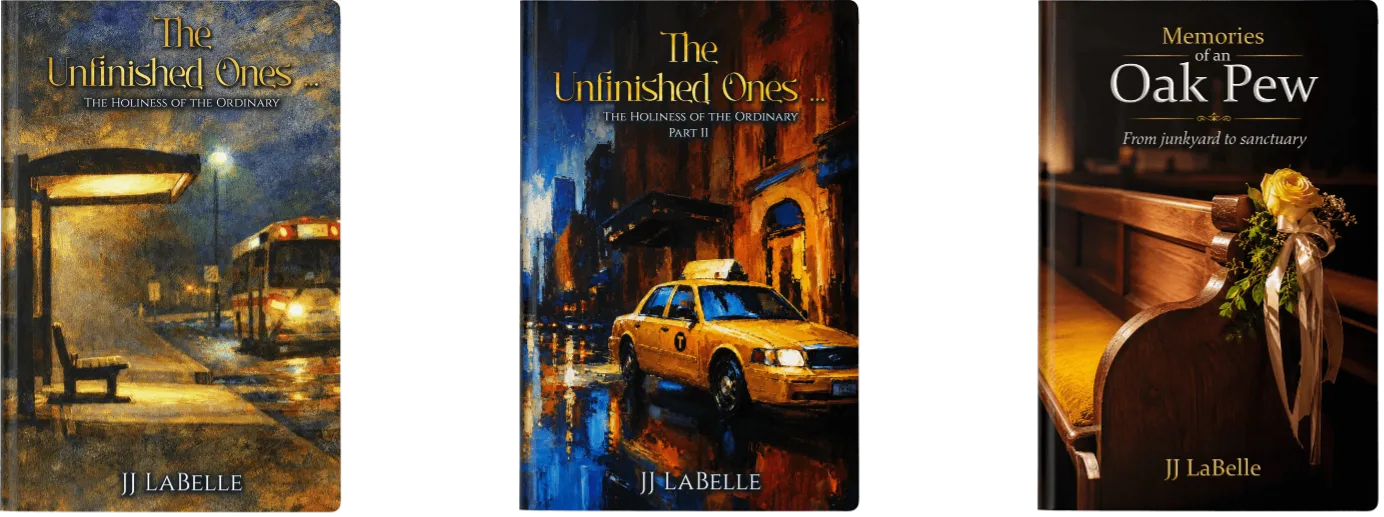
LaBelle’s fiction often begins with a place where strangers share space. A moving bus, a working taxicab, and the back of a church give her characters reasons to encounter one another. Within these settings, the spiritual questions emerge through stories, conversation, and the gradual recognition of another person’s pain.
The Unfinished Ones
In The Unfinished Ones: The Holiness of the Ordinary, Boone takes a bus journey while struggling with grief and a troubled sense of belonging. The people he meets carry their own wounds and unfinished stories. The route becomes a framework for encounters that challenge what he understands about himself. LaBelle uses travel as a way to place inward change beside outward movement. Readers can follow an individual search for meaning while recognizing the fears, regrets, and hopes of the other passengers. The novel invites attention to the people we might otherwise reduce to a passing face.
The Unfinished Ones Part II
The Unfinished Ones: Part II transfers that interest in strangers to Sally’s taxicab. A longtime driver, Sally notices details others overlook and listens to the people who enter her vehicle. When a local nurse disappears, those habits draw her into a mystery. The premise gives the story forward momentum while retaining LaBelle’s concern for compassion and second chances. Sally’s ability to see people becomes both a character strength and a source of suspense. Faith operates through what she notices and how she responds, giving readers an entry point through a recognizable woman doing an ordinary job.
Memories of an Oak Pew
Memories of an Oak Pew: From Junkyard to Sanctuary makes a different narrative choice. Its pew observes people at moments when their composure begins to give way. The manuscript makes clear that the wood itself has no healing power. Its importance lies in providing a place where a person can become still enough to face the truth. The pew’s journey from abandonment to usefulness mirrors the possibility of renewed purpose in the lives around it. This unusual viewpoint gives the book a memorable identity and allows separate human stories to remain connected within one sanctuary.
Nonfiction that meets readers in difficult seasons
The questions raised by LaBelle’s fictional characters also shape her nonfiction. What happens to purpose as we age? How can faith hold sorrow? When does a healthy sense of worth become an attachment to self? She approaches these concerns through Christian reflection, using imagery and accessible language to keep the discussion close to lived experience.
The Mirror and the Mercy
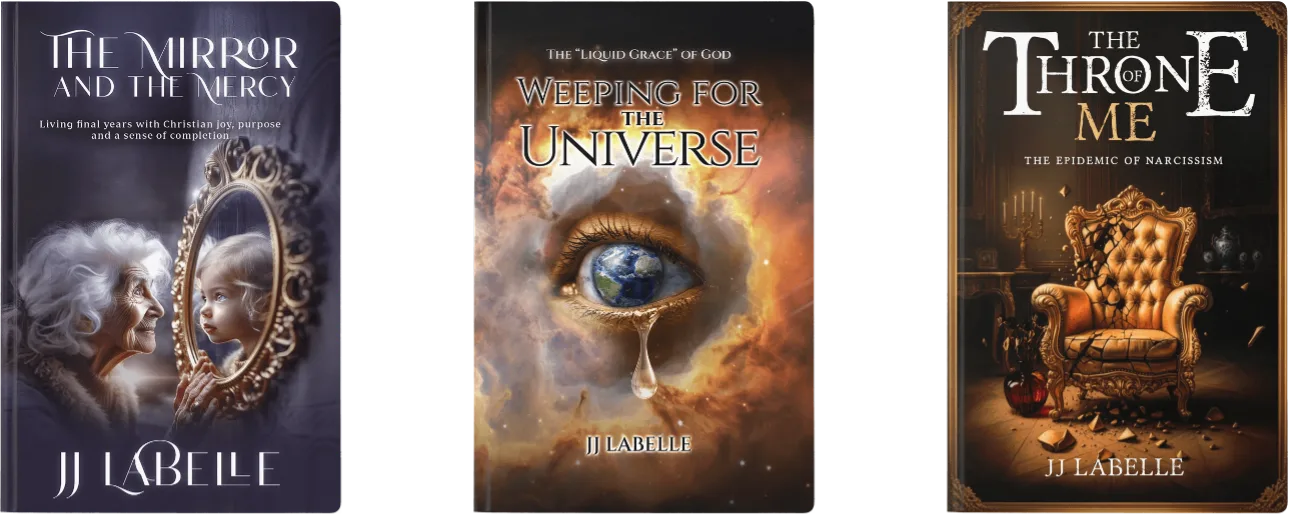
The Mirror and the Mercy: Living Final Years with Christian Joy, Purpose, and a Sense of Completion addresses the emotional and spiritual weight of aging. It presents later life as a season in which service, forgiveness, and a deeper relationship with God can continue to develop. The book speaks to older adults and to the families and caregivers who share that season with them. Its appeal lies in taking their questions seriously: how to find peace with the past, remain useful in the present, and approach life’s final chapters with faith. LaBelle places dignity and purpose at the center of that discussion.
Weeping for the Universe
Weeping for the Universe: The Liquid Grace of God considers sorrow through the lens of divine compassion. Its reflections move through creation, loss, redemption, and restoration, bringing poetic language to questions that can be difficult to express directly. The idea of liquid grace gives the book a visual way to contemplate God’s relationship with a suffering world. For readers living with grief or trying to reconcile pain with belief, the book offers an invitation to consider Christian hope alongside sorrow. Its distinctive quality is the emotional perspective it brings to theological reflection.
The Throne of Me
The Throne of Me: The Epidemic of Narcissism turns toward pride, the hunger for validation, and the spiritual consequences of making the self the center of life. LaBelle uses the throne as a sustained image for control and self-worship. Her emphasis is Christian examination and renewal; the manuscript identifies her as a writer seeking truth and healing rather than a psychologist. The book asks readers to consider their own choices as well as the culture around them. Its imagery gives an abstract subject a concrete shape, making surrender easier to picture and harder to dismiss as an idea that applies only to someone else.
A wider catalogue of Christian reflection
LaBelle’s earlier titles help establish the questions that recur throughout her writing. They consider who Christ is, where believers belong, and what stands in the way of a deeper life of faith. Each offers a different doorway into that larger conversation.
Looking closely at the Savior
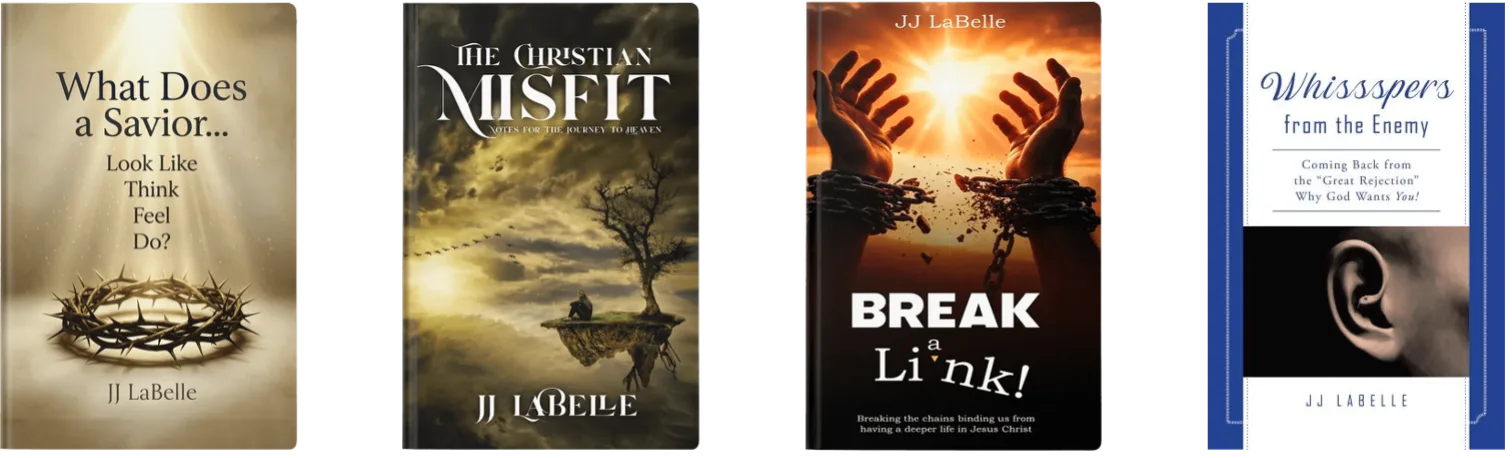
What Does a Savior… Look Like Think Feel Do? invites readers to reflect on Jesus’ character as well as His actions. Compassion, humility, forgiveness, and sacrifice become subjects for personal examination. Its focus on how Christ lived connects biblical reflection with the reader’s own behavior. For someone beginning a faith journey or revisiting familiar Scripture, it offers a way to slow down and consider the person behind the events.
Finding belonging in Christ
The Christian Misfit: Notes for the Journey to Heaven speaks to readers who feel out of step with the world. LaBelle connects that restlessness with Christian identity and the belief that earthly life is part of a larger journey. Her accessible presentation gives people room to examine alienation, purpose, and hope. The subject also connects naturally with her fiction, where a passenger or a person sitting at the back of a church may be quietly asking where they belong.
Recognizing what keeps a person bound
Break a Link! examines the attachments and wounds that can obstruct a deeper relationship with Jesus Christ. The chain provides a practical image for recognizing what still has power over a life. LaBelle approaches freedom through Christian reflection on the past, forgiveness, and the choices available in the present. The book speaks to readers who recognize a recurring pattern and want to consider what change could begin with confronting one part of it.
Learning which voices to trust
Whissspers from the Enemy: Coming Back from the Great Rejection Why God Wants You! examines sin, pride, and spiritual discernment. It considers the influences that draw people away from God and the possibility of returning through attention to the Holy Spirit. These competing voices also shape the decisions her fictional characters face.
New projects extend the spiritual conversation
Born to Rise: The Hidden Life of the Soul continues LaBelle’s interest in the relationship between what can be seen and what develops within. Its manuscript begins with creatures, including the butterfly, sparrow, and honeybee, before turning toward stages of inner awareness and surrender. Nature becomes a vocabulary for contemplating spiritual change. The book’s structure moves from observation toward the soul’s journey, giving readers a sequence of images through which to consider purpose and transformation. Its dedicated website page offers a place to follow information about the title.
Three additional works in development reveal how LaBelle is expanding her fiction and reflective storytelling. Together, they carry familiar themes into new narrative forms.
The Soul Whisperer
The Soul Whisperer: The Spirit Within presents four fictional stories based on real-life situations and imagines them through the perspective of the Holy Spirit. Its people are imperfect, wounded, and sometimes resistant to change. This unusual narrator allows LaBelle to examine conviction and grace across different lives. The manuscript’s short passages and measured cadence give spiritual reflection an intimate quality, encouraging readers to attend to changes that a character may initially struggle to recognize.
Would I Die for Him
Would I Die for Him? From Surrender to Martyrdom brings Suzette, a French professor, and Jason, a Boston psychologist, into conversation at a French café. Their discussion considers courage, sacrifice, and the surrender of pride and fear. The setting gives serious questions a human context, with friendship developing through shared attention. LaBelle uses dialogue to test ideas from different perspectives, creating a work in which the question of sacrifice grows out of an encounter between two people.
The Book of Joram
The Book of Joram: Who Really Crucified Jesus? imagines voices surrounding the Crucifixion through Joram, a scribe. LaBelle explicitly identifies these voices as fictional reflections rather than additions to Scripture. The manuscript looks toward the people at the edges of a momentous event: those who participate, watch, fear, or fail to understand. That attention to the overlooked connects this biblical fiction with her contemporary stories. Across very different settings, she asks what an individual sees and what responsibility follows.
What gives these stories their identity
The most recognizable element in LaBelle’s work is the use of familiar things to give spiritual questions a visible form. A pew can suggest refuge. A journey can expose uncertainty. A throne can reveal an attachment to control. These images organize the reader’s experience, giving each book a clear center while allowing room for different people and problems.
Her choice of viewpoint matters just as much. A traveler meets lives he cannot fully know. A taxi driver becomes a listener and observer. A pew remains present while people come and go. Through these perspectives, LaBelle asks readers to spend time with someone else’s experience before arriving at a judgment. Her Christian convictions are explicit, and the narratives create occasions to consider how those convictions might be lived.
The possibilities beyond the page
These qualities suggest a promising foundation for a future move into Christian screenwriting. The case begins with concrete story elements: recognizable locations, characters with unresolved needs, and encounters that can alter a decision. LaBelle’s fiction provides material a screenwriter could develop into visible action while preserving its Christian concerns.
The Unfinished Ones offers an ensemble journey in which each stop can reveal a new character and deepen Boone’s struggle. Part II adds a central mystery and a protagonist whose everyday occupation brings her into contact with people and clues. Sally’s intuition, compassion, and persistence could support a faith-centered drama with suspense running through it.
Memories of an Oak Pew suggests an intimate ensemble film or a series of connected stories set around one sanctuary. Its central object could become a visual thread linking people across different moments. The Book of Joram offers another possible form: a biblical drama shaped by witnesses whose accounts gradually expand the audience’s understanding. These are adaptation possibilities suggested by the writing, rather than announced productions.
Developing screen drama would mean expressing reflection through action and sustaining character arcs across a film or episode. LaBelle’s strength in conceiving settings and emotionally charged encounters gives that work a place to begin. Her potential lies in the human stories through which she explores belief.
Discover the author and choose a first book
Readers drawn to fiction can begin with The Unfinished Ones or Memories of an Oak Pew. The Mirror and the Mercy addresses aging and purpose, while Weeping for the Universe explores sorrow and grace. Each offers a way to discover an author whose work asks us to notice lives around us.
Explore the books and new projects at jjlabelle.com and her Amazon author page. Follow Judi on Facebook or visit her contact page for author inquiries. Begin with the book closest to your own season of life.
Explore the books and connect with JJ LaBelle
Use the title links to visit the author’s book pages. Retailer links below provide the formats linked from those pages, with a separate listing for Whissspers from the Enemy.
| Book | Amazon | Barnes and Noble or other retailer |
| The Unfinished Ones | Ebook | Paperback | Hardcover | Ebook | Paperback | Hardcover |
| The Unfinished Ones Part II | Ebook | Paperback | Hardcover | Ebook | Paperback | Hardcover |
| Memories of an Oak Pew | Ebook | Paperback | Hardcover | Ebook | Paperback | Hardcover |
| The Mirror and the Mercy | Ebook | Paperback | Hardcover | Ebook | Paperback | Hardcover |
| Weeping for the Universe | Paperback | Hardcover | Ebook | Ebook | Paperback | Hardcover |
| The Throne of Me | Ebook | Paperback | Hardcover | Ebook | Paperback | Hardcover |
| What Does a Savior… Look Like Think Feel Do? | Ebook | Ebook | Paperback | Hardcover |
| The Christian Misfit | Ebook | Paperback | Ebook | Paperback | Hardcover |
| Break a Link! | Audiobook | Paperback | Paperback |
| Whissspers from the Enemy | See author catalogue | Walmart paperback VitalSource ebook |
| Born to Rise | Book information and updates | Visit the book page |
Follow Judi and her work
Website https://jjlabelle.com/
Amazon author page https://www.amazon.com/stores/author/B0GCNK7XRH/allbooks
Facebook https://www.facebook.com/jjlabelleauthor/
The Soul Whisperer, Would I Die for Him?, and The Book of Joram are works in development.
Follow the author’s website and social channels for updates.