

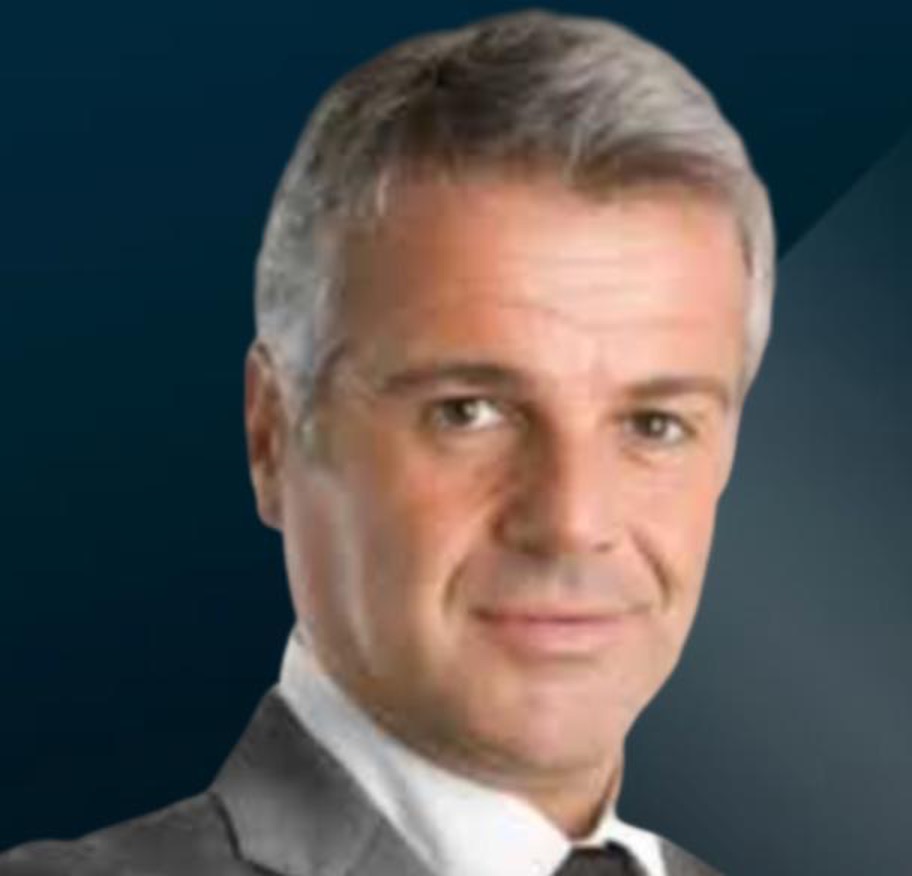
A San Diego trial lawyer has watched juries change from the inside for four decades. What he sees now, he says, is a courtroom competing with a feed that never stops talking.
Ronald Laba has been picking juries in California since the mid-1980s. For most of that time, the job started with a simple question to the people in the box: have you heard anything about this case? These days he asks a different one. Can you set aside what you already believe?
That change, small as it sounds, is most of what has happened to the American courtroom in forty years, and Laba has watched all of it from the counsel table. He is a personal injury and mass tort attorney in Vista, north of San Diego, the kind of lawyer who represents the person and not the company. He built his practice on a plain idea, that a client should get the lawyer they hired, from the first phone call to the last day of trial, and not a case manager they have never met. After four decades, he still answers his own phone.
What he wants to talk about, though, is not himself. It is what is happening to the jury, and to the fair trial, in a country where everyone has already made up their mind before the evidence is heard.
From The Morning Paper To The Live Feed
When Laba started, a juror knew whatever had made the morning paper, and only then if they bothered to read it. There was no way to look anyone up. A trial was, for most people who sat on one, the first time they heard the facts.
The first real shift came around 2015, and it did not come from the jury. It came from the other lawyer’s laptop. During jury selection, before a single question had been asked, Laba noticed opposing counsel getting a live feed on the people in the pool. Their politics. Their income. Which apps they used, which shows they watched, where they got their news, and anything they had ever posted about lawsuits or big companies.
“That’s before a single question was asked,” Laba said. What used to take days of research now happens in seconds, and he says it has become the norm. “For most cases, that is now more the standard than the exception. If you didn’t do it, you might be criticized. You picked a bad jury.”
Courts noticed. In a lot of places the questionnaires jurors fill out have been rewritten to ask directly about social media and what they have already seen, with judges putting the question to the panel before the lawyers get their turn.
The Algorithm That Knows The Juror
What makes this moment different from the tabloid era, Laba argues, is not speed. It is how personal it has become. A generation ago a big case reached people through newspapers and television, outlets that, whatever their faults, at least tried to show more than one side.
“Now with social media, you will find presentations that are entirely one-sided,” he said. The message reaches a juror, he added, through “an algorithm that knows exactly what will grab the person.” It feels personal because it is built to. And running a campaign to shape a jury pool before a trial, he pointed out, is often perfectly legal.
In the mass tort cases he handles, he has watched it work from both directions. People come forward on social media with their own accounts of being hurt by a product. Groups organize to pressure the company by filling the public conversation with those stories. The company answers with its own careful posts, its denials, its alternative explanations. By the time a case is ready to be filed, Laba says, a full public narrative already exists on both sides, entirely outside the legal process.
The line into something illegal is narrow and specific: going straight at jurors, leaning on witnesses, or a party saying things out of court it knows will taint a jury. Gag orders exist, but they only reach the parties and their lawyers, and only after a case is filed. “There’s really no outside force to prevent other people from flooding social media,” he said.
The Client Still In The Hospital
For the ordinary injured person, the imbalance is worse. Laba’s clients are usually one individual up against a company or an insurance carrier with resources they could never match.
“A big company can have a PR crisis team responding in hours,” he said. “Sometimes my client’s still in the hospital.” He does not try to compete on volume. “You can’t outshout a company with a PR department, so all you can do is out-document them instead.” He keeps everything the other side says in public, because it can turn into an admission later and be used against them. The point, he said, is “to focus on winning the case in the room that actually matters, not the internet.”
The watching runs the other way too, and it is quieter. In smaller cases, Laba said, the insurance company is often “quietly combing through my client’s Instagram for a gym check-in or a birthday photo to argue that they’re not hurt, and that happens before we’re anywhere near a settlement table.”
He does not think the fight is lost. “An authentic, real story can still beat a marketing budget,” he said. “It’s just harder.”
When The Juror Asks The Machine
Which brings the whole thing back to the jury box, and to the newest problem Laba sees coming, one that reaches deeper than any headline ever did.
Picture a truck accident trial. Two accident-reconstruction experts have testified, each with a different account, built on physics and competing assumptions about how fast the vehicles were going and who had time to stop. A juror takes careful notes. That night, at home, he types the numbers into an artificial intelligence tool he has used and trusted for two years, and asks it who is right.
The tool was not in the courtroom. It did not hear the cross-examination that took one expert apart, did not watch the experts’ faces while they testified, did not see the exhibit that backed up the other one. It knows only what the juror types into it. And the next morning the juror walks back in with an answer the court never saw him get.
“I’ve heard of jurors, sophisticated jurors, taking notes and then plugging in those theories and calculations given by the accident reconstructionists into AI and then coming back with their own conclusions,” Laba said. “They’re actually weighing evidence through an expert platform. That’s a much bigger problem than just somebody who reads a news story after being sworn in.”
The safeguard against it turns out to be thinner than most people assume. Judges tell jurors not to research a case, not to look at their feeds, not to go hunting for outside information. But the instruction is, in the end, a request.
“The judge will order them not to,” Laba said. “But you’re right, at the end of it, the jurors are basically on the honor system.”
Artificial intelligence tests that honor system in a way a stray news story never did. A juror who reads an article gets one more opinion. A juror who feeds expert testimony into an AI tool thinks he is consulting a neutral authority, when he is really consulting a system fed a one-sided summary by the very person looking for reassurance. Laba is careful here. The tool is only as good as what the juror puts into it, and it was not in the room. But he has watched people, clients among them, treat these things as close to gospel.
“I know a lot of people, clients included, that really kind of view AI as infallible,” he said. That misplaced trust is what worries him. A juror wanting to check a hunch might reach for a tool he has used and trusted for a couple of years and thinks is a good source. Whatever it tells him, Laba said, “would make a pretty big impression.”
None of this, he stressed, has come up in his own cases. He is describing what he has heard and seen across the profession. And he is the first to say that for most disputes, the courtroom still runs the show. In a case that is only about someone’s reputation, he allowed, the online verdict may be the one that counts. But in criminal trials and cases about money, the slower process still matters.
“You still need twelve people and real evidence,” he said. “The Internet can’t sentence anyone or write a check.”
What Worries Him Most
Ask an ordinary person who has just watched a case blow up across their feed whether a fair trial is even possible anymore, and Laba’s answer is about as reassuring as he gets. It rests entirely on the honor system holding.
“Fair doesn’t mean nobody heard anything,” he said. “It just means twelve people who commit to deciding only what’s going on in the courtroom. And that commitment, in my opinion, it still means something, even in a noisy information environment.”
Asked, after forty years, what troubles him most about where all of this is going, Laba did not name the algorithms or the chatbots. He named something slower, and harder to write a law against.
“I think what worries me the most is the erosion of patience,” he said. “This work depends on people willing to wait for a process, investigation, discovery, sometimes a trial. But social media trains people to expect an instant verdict, and that’s a hard habit to unlearn in the jury box.”
A system that depends on people waiting for all the evidence is running up against a culture built to hand them the answer first. A gag order cannot fix that, and neither can a jury instruction. It comes down, Laba says, the way it always has, to the twelve people in the box.
Read Also:
AI Is Lowering the Barrier to Filmmaking. The Next Challenge Is Building a Career
The Changing Landscape of Corporate Advisory in Switzerland – Insights by Prospero Pica
The Long Way to Build a Travel Brand: Twenty Years on the Ground With Empire Tours